Get Full Government Meeting Transcripts, Videos, & Alerts Forever!
Get email alerts on the Mental Health Suicide Prevention topic
No spam. Unsubscribe anytime.
San Luis Valley 'Coffee Project' brings rural suicide-prevention trainings to Monte Vista
Summary
Larry Brown presented the San Luis Valley Coffee Project — a rural mental-health outreach and suicide-prevention effort — and described its COMET training, local partnerships, and recent uptake by regional water agencies; city staff expressed interest in participating.
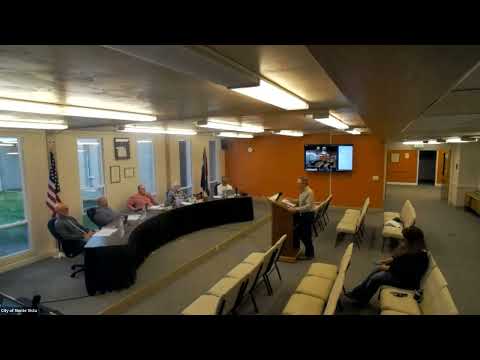
Larry Brown, a presenter invited by City Clerk Anita, told the Monte Vista City Council on Oct. 2 that the San Luis Valley "Coffee Project" brings informal community gatherings and short trainings aimed at suicide prevention to agricultural and rural communities.
Brown said the program began in the Lower Arkansas Valley after multiple farm-related suicides and has grown into a set of local trainings and social events intended to reduce stigma and increase layperson awareness. "COMET stands for changing our mental and emotional trajectory," Brown said, describing the project’s two-hour soft-skills session that teaches how to recognize distress, open a conversation, and when to call crisis numbers such as 988.
The training is not clinical, Brown emphasized; it is designed to give laypeople conversational tools and basic crisis-recognition steps. He said the local advisory group has run roughly 20–25 trainings and that "probably in the neighborhood of having had 130 to a 140 people in the Valley that's been through the training." Brown named Valley-wide partners including Valley Wide Health Systems and listed local "investors" — community organizations and businesses whose logos appear on outreach materials to reduce stigma.
City officials and staff discussed local interest and potential uses. Anita, the city clerk, said she plans to take the training: "I did tell Larry that I am interested in taking the class, so I will be taking the class." Brown said the program has given presentations to conservation district boards and banks and that the Division of Water Resources requested an overview for its staff and plans to offer the training to its employees later in the fall.
Brown said materials are being adapted for Spanish but that an existing Spanish translation was inadequate; the city office will work with his team to offer a Spanish facilitator soon. He also described an instance where staff who had taken the training helped de-escalate callers and referred individuals to help, and he said those cases remain living "as far as we know." He encouraged the council and city staff to schedule trainings for city employees and community groups.
No formal city action or funding decision was made at the meeting; Brown said training is scheduled on request and recommended organizations contact his team to arrange sessions.