Get Full Government Meeting Transcripts, Videos, & Alerts Forever!
Get email alerts on the Education Policy topic
No spam. Unsubscribe anytime.
Issaquah board reviews ‘profile of a graduate,’ homework and grading at two-day retreat; town halls set for October
Summary
Board members and staff spent a multi-hour retreat reviewing a draft ‘profile of a graduate,’ discussing homework and grading consistency, accelerated learning in elementary grades and potential mastery-based approaches; the board scheduled community town halls in October to gather public input.
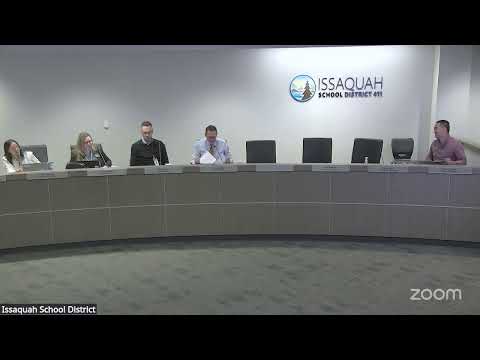
At a two-day board retreat reviewed at the Oct. 9 meeting, the Issaquah School Board recapped multi-hour discussions about a draft ‘‘profile of a graduate’’ and broader curricular and grading issues, and set a schedule for public town halls later this month to gather community input.
Why it matters: The ‘‘profile of a graduate’’ exercise is intended to define skills and experiences students should leave the district with; the board said the profile would drive strategic-plan revisions and influence course offerings, assessment and student supports over time.
Key themes from the retreat
Profile of a graduate: Board members discussed reimagining graduation outcomes to emphasize skills such as critical thinking, curiosity, agency and adaptability for an uncertain job market. The board heard from a session with a state lawmaker’s ‘‘big ideas’’ work group and read material about mastery-based learning to inform the conversation. The board will present the draft profile at a set of three town halls later this month, including Oct. 16, and collect community feedback.
Homework and grading: Directors said they want more consistency across schools for homework and grading practices while acknowledging the operational complexity of aligning grading for 6,000 high-school students. Directors described homework as part of a larger discussion about grading policies, equitable practices and student workload. Board members and student representatives said students experience substantial variation between teachers and buildings; student speakers said unpredictability about teacher workload can force schedule changes and drop decisions.
Grading philosophy: Board members discussed shifting grading to emphasize mastery and improvement rather than point-averaging. ‘‘Grades are currency that you earn to spend at the college of your choice and not communication,’’ said one director during the session summarizing the concern raised and urging grades be better aligned with mastery outcomes. Directors noted ties between grading and collective-bargaining contract terms and said work through a grading-practices committee will be needed to operationalize change.
Accelerated learning and elementary pathways: The board revisited how and when students are identified for accelerated programs, noting that a large percentage of elementary students already test above grade level in math and that acceleration models ought to be examined for inclusion and access. Directors discussed whether success blocks and pullouts are the only way to accelerate or whether more differentiated opportunities should be available broadly.
Student voice and implementation
Students participated in panels and the retreat work; board members and staff said student input influenced committee thinking on levies, grading and homework. The district plans to take the draft profile and discussion points to school staff, host town halls and convene site-level staff meetings to gather teacher and family feedback before any policy changes are proposed.
Next steps
The board plans public town halls at locations and dates announced in district communications (board members cited Oct. 16 and other late-October dates) and directed staff to begin community outreach and staff-level conversations. The board emphasized that any changes would be phased and would not be implemented overnight.