Get Full Government Meeting Transcripts, Videos, & Alerts Forever!
Get email alerts on the Levy Funding topic
No spam. Unsubscribe anytime.
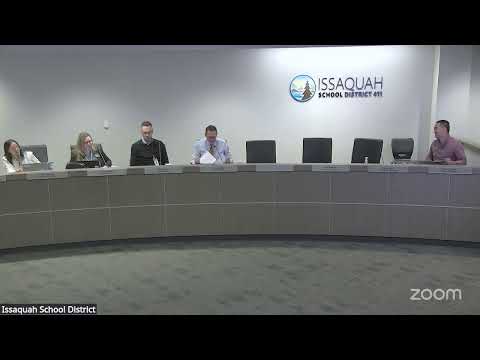
Issaquah board adopts superintendent-backed levy package after advisory committee recommendation
Summary
The board voted to place three replacement levies on an upcoming ballot—an educational programs and operations levy, a capital levy (technology and critical repairs) and a transportation levy to support bus replacements and electric charging infrastructure—following a multiweek levy-advisory process.
The Issaquah School Board on Oct. 9 adopted resolutions putting three replacement levies before voters after receiving a recommendation from a 5-meeting levy advisory committee.
The package includes a four-year educational programs and operations (EP&O) levy, a four-year capital levy that combines technology and critical repairs, and a one-year transportation levy to fund new buses and electric charging infrastructure. The board also set levy language and estimated collection amounts for each year as part of the resolutions it approved.
Why it matters: The EP&O levy provides locally raised revenue that supplements state funding for daily operations; board members said the current proposal would continue programs not fully funded by the state and represents about 16.6% of the district’s general-fund revenue. The capital levy targets technology, building systems and safety upgrades; the transportation levy would fund bus fleet replacement and pilot broader electric-bus charging capacity.
What the advisory committee recommended
The levy advisory committee met five times in September and October, reviewed budget options and district needs, and included more than 60 students, parents, staff and community members who applied and were accepted. Committee members ranked and revised proposals; the committee’s final recommendation mirrored the superintendent’s package and earned strong consensus scores in exit polling (committee scores reported in meetings ranged around 4.7–4.8 out of 5 for the package elements).
How the package was structured
- EP&O: A four-year levy was presented with annual estimated levy amounts for 2027–2030; the board approved resolution 12-48 to authorize the ballot measure. The board described the proposal as keeping funding stable while not asking for the full levy authority available under recent legislative changes.
- Capital (technology + critical repairs): The board approved resolution 12-49 to combine technology needs (devices, cybersecurity, AI-for-education pilots, data warehousing and staff training) with critical repairs (roofing, HVAC, fields, safety vestibules and project management). Committee members prioritized maintaining the one-to-one device program and addressing high-priority building repairs across feeder patterns.
- Transportation: The one-year transportation levy, approved via resolution 12-50, would fund bus replacements and some electric-charging infrastructure. Committee members discussed piloting electric buses at the district’s existing charging site but recommended widening the pilot by adding charging capability at the district’s main vehicle facility so routes across the district could be served.
Tax-rate estimate updated
Committee work was grounded in a target parameter for a stable tax rate. After the committee finalized its recommendation, the county provided a preliminary assessed-value estimate that lowered the projected tax rate for the combined package; district staff told the board the projected combined levy rate estimate moved from about $3.17 per $1,000 of assessed value to an estimated $3.09 per $1,000 based on new county data. The dollar amounts of the levies recommended by the committee did not change; the estimate changed because of the updated assessed value information.
Ballot timing and next steps
Officials said ballots are scheduled to go out in January with an election day in February (the committee and staff cited a Feb. 10 election date). The board authorized staff to file levy resolutions with the county and begin the public-information and community-engagement phase, including solicitation of pro/con committee members and wider communication to residents. Board members asked staff and levy committee volunteers to continue outreach and student-centered messaging through school channels.