Get Full Government Meeting Transcripts, Videos, & Alerts Forever!
Get email alerts on the Economic Development topic
No spam. Unsubscribe anytime.
Developers propose $100 million overhaul of Noland Fashion Square, ask city for TIF, CID and other tax tools
Summary
Trieland Properties told the Independence City Council it needs a package of incentives including a tax-increment finance plan, extensions to the community improvement district and a Chapter 100 materials exemption to make a $100 million redevelopment of Noland Fashion Square financially viable and keep Price Chopper in the city.
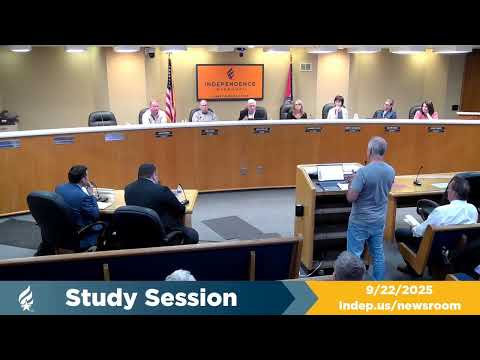
Trieland Properties on Monday told the Independence City Council it is seeking public finance tools to redevelop the vacant Noland Fashion Square at the corner of Noland Road and U.S. 40 in Independence.
"Delivering the project vision as outlined by Rich requires an an estimated investment of $100,000,000," said John Hansen of IRR during the presentation. The development team asked the council to approve a package that includes tax-increment financing (TIF), 50% PILOTs (payments in lieu of taxes), a 100% redirection of incremental sales taxes (referred to by the team as 100% EATS), extension of the existing 1% Community Improvement District (CID) sales tax, a $1-per-square-foot CID special assessment, support for forming a Transportation Development District (TDD) with a 1% sales tax and a Chapter 100 sales-tax exemption on construction materials.
The developers said those incentives close a financing gap and raise the expected project return from about 3.76% without incentives to about 10.75% with the requested public tools. Richard Dubey, president of Trieland Properties, said the project would replace a largely vacant, blighted property and preserve a Price Chopper store in Independence. "Ultimately, what are the benefits to the city of Independence on a property that's been for all intents and purposes vacant for the last 15 or 20 years," Dubey said.
Why it matters: the mall has been almost entirely vacant and the developer says preserving a new Price Chopper store as anchor will generate the traffic needed to attract other tenants. Trieland said the redevelopment would preserve jobs, improve the appearance of a primary entrance into the city and extend the usable life of the property's buildings for decades.
Key financial and timeline details the developers presented: total estimated project cost about $100 million; developer equity about $53.75 million; redirected TIF revenues estimated at roughly $24.4 million (about 24% of the project, a deviation from the city’s usual 20% policy); CID and TDD sales-tax add-ons and a CID special assessment estimated to fund about $18.9 million plus about $3 million respectively; the team estimates the redevelopment would be able to achieve the 10.75% target return only with these public incentives. The team proposed an aggressive schedule: development agreements in February 2026, bond sale in August 2026, construction start in October 2026 and Price Chopper opening in April 2027.
The developers also presented estimates of fiscal effects on the city. John Hansen said a stabilized year would generate roughly $750,000 per year in incremental sales taxes from the project area, of which about $300,000 would be general-city revenue and roughly $450,000 would be special-tax redirections under the suggested structure. The team told the council that Price Chopper’s existing store at Noland and 70 will close by February 2028 and that relocating it to the redeveloped center is a primary driver for the proposal; the new Price Chopper would be about 63,000 square feet compared with an existing 83,000-square-foot store.
Council questions focused on oversight, the size of the public subsidy and protections for the city. Councilmember McCandless pressed the team on who would pay the proposed special assessment and on reporting and oversight; John Hansen said the CID special assessment would be a real-estate assessment paid by tenants and that expenditures must follow the Community Improvement District Act with city staff and professional advisers certifying reimbursable costs. David Martin of Gilmore & Bell, the city’s bond counsel, told the council that statutes governing each incentive contain rules for how surplus funds are handled and that contracts and bond documents can be written to wrap up special districts once reimbursable costs are satisfied.
No formal council action was taken Monday; the presentation was informational and councilmembers asked staff to continue negotiating and preparing the redevelopment agreement. The city manager and bond counsel will work with the developer to draft an agreement for council consideration and the matter will go to the TIF commission as part of the next steps, city staff said.
Concerns and risks noted during the discussion included the property's current condition (the team described the main mall as essentially 100% vacant and in poor interior condition), higher redevelopment cost compared with a prior “hub” project, and the reliance on Price Chopper as an anchor to drive traffic. The developers acknowledged the deal requires a deviation from the city's 20% TIF policy and stressed the city would not be on the hook for bond debt service; the development team said bonds could be issued by an industrial development authority and that the city would not guarantee debt service.
Next steps: staff, bond counsel and developer will draft a redevelopment agreement for council consideration; the developers said they would be prepared to move immediately if the council provides the requested approvals. If the council supports the package, the team proposed a February 2026 agreement, an August 2026 bond sale and an opening target of April 2027 for Price Chopper.
The presentation did not include a formal vote or an approved agreement. Council members emphasized they need full documentation and oversight language in any redevelopment agreement before approving incentive tools.