
Alabama education board hears sharp public debate over ‘intellectual freedom’ resolution
Get AI-powered insights, summaries, and transcripts
Subscribe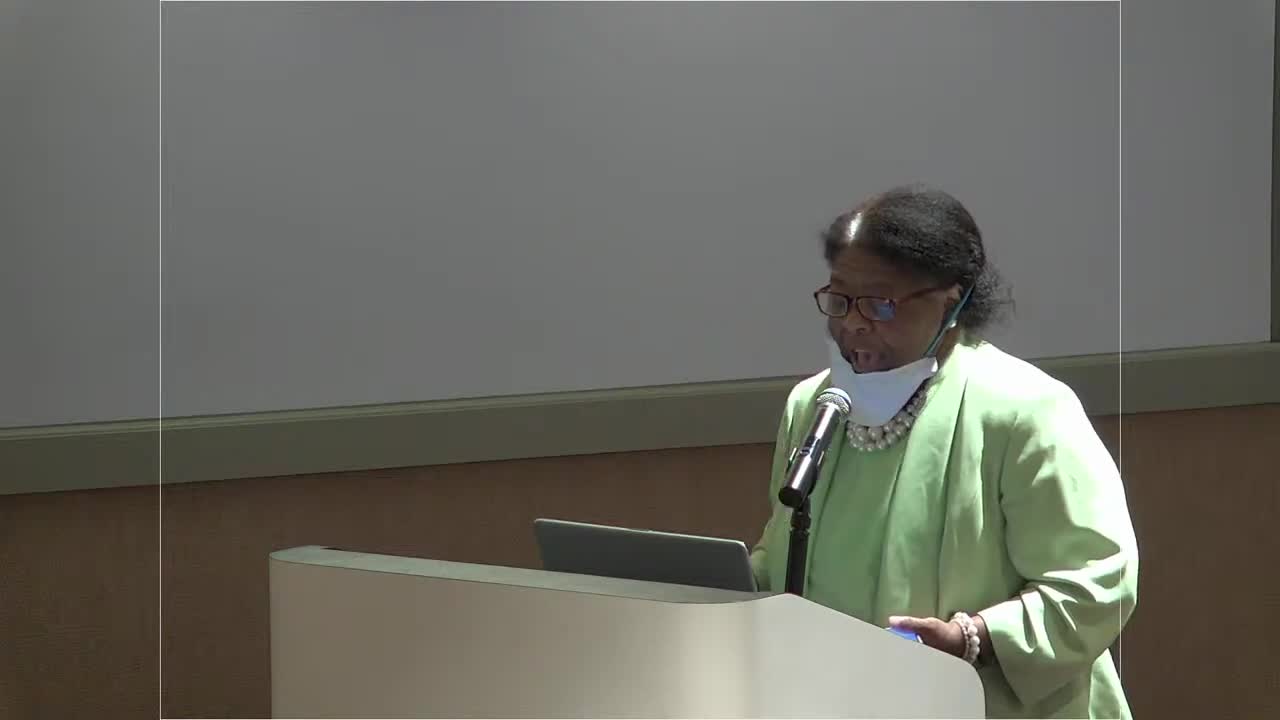
Summary
The Alabama State Board of Education on Aug. 12 fielded heated public comments and internal debate over a proposed resolution “declaring the preservation of intellectual freedom and nondiscrimination in Alabama’s public schools,” with board members taking public positions and a roll-call vote taken at the meeting.
The Alabama State Board of Education on Aug. 12 fielded heated public comments and internal debate over a proposed resolution “declaring the preservation of intellectual freedom and nondiscrimination in Alabama’s public schools,” with board members taking public positions and a roll-call vote taken at the meeting.
The item drew parents, civil-rights leaders and faith leaders to the microphone during the public-hearing period, where several speakers urged the board to reject the resolution as written, saying it could chill truthful teaching about slavery and race. Others urged the board to adopt the resolution to bar what they called divisive ideologies from K–12 classrooms.
The controversy centered on whether the board’s language would limit teachers’ ability to discuss slavery, systemic racism or other difficult historical topics. Bernard Simonson, president of the Alabama State NAACP, told the board: “This resolution, if passed, will so distrust and erode confidence in our public schools and hardworking educators.” He argued the resolution misstates history and would harm efforts to address disparities in discipline and achievement.
“I’m asking the board to consider including language that supports honest intellectual discussion of race and racism, when and if those discussions arise in Alabama classrooms,” said Dr. Eric Little, a resident of Dothan, urging protections for teachers who engage in objective academic discussion. “There is nothing in this document that supports a teacher who engages in honest dialogue with his or her students about racism or racial discrimination.”
Other public speakers pressed different points. Pastor J.E. Turnbull, president of the Lawrence County branch of the NAACP, said the state has “always taught throughout the history that 1 race was superior to another race” and asked the board to vote no on the resolution. Terry, a Birmingham school board member speaking in a personal capacity, said educators should use “teachable moments” and that it is acceptable for some students to feel uncomfortable while learning uncomfortable truths: “It is not the end of the world if our white children get uncomfortable at school.”
Opponents of critics’ views also spoke. Benson Miller, representing Urban Conservatives of America, urged the board to approve the resolution and warned against what he described as “critical race theory.” Laurie Herring said she believed concepts associated with critical race theory were being taught in some Alabama schools through programs such as the Anti-Defamation League’s No Place for Hate and other local initiatives.
Board member Wayne Reynolds — who said he had consulted with teachers, community groups and civil-rights leaders before the meeting — introduced a motion to adopt the resolution “as presented.” After discussion, Reynolds said on the record that he would vote against the document in its current form, adding that he wanted teachers to retain autonomy to “utilize their expertise.” Several board members voiced similar concerns that the resolution, as written, could have the unintended effect of constraining classroom instruction about African American history.
State Superintendent Eric Mackey acknowledged the range of views expressed and told speakers the department and board hear “every person’s voice.” Mackey and board members emphasized commitment to “high-quality education for every child in this state.”
A motion to adopt the resolution was made and seconded and the board proceeded to a vote. The meeting transcript records the board calling for those in favor and those opposed; the transcript does not include a public, read-back tally of votes in the record provided. The item drew the lengthiest public comment of the morning and prompted several board members to request clearer language that would protect both instruction of factual history and teachers’ academic discretion.
The public-comment portion of the meeting included repeated requests that the board either withdraw or amend the resolution to explicitly protect teachers who “engage in honest dialogue” about race as part of a broader curriculum, and calls from civil-rights leaders for a resolution that “tells the truth about this great state and its great nation.”
The exchange was part of a broader statewide debate this summer about curriculum and classroom instruction; speakers referenced recent legislative activity and local programs. Several public commenters cited local school-system practices and named programs used in specific districts.
The board’s agenda showed follow-up items on the calendar and state-superintendent reports; several board members said they had raised similar concerns in prior meetings and asked staff for more time or clearer language before voting on policy statements. The transcript indicates the board moved on to other formal business after the vote.
The board’s next regular meeting was announced for Sept. 9, 2021, in Montgomery; proponents and opponents said they expect to continue pressing the issue to seek clarifications or amendments to any final board statement on curriculum and instruction.