Get Full Government Meeting Transcripts, Videos, & Alerts Forever!
Four Klamath River dams removed after decades-long fight; tribes, fishermen and farmers weigh impacts
Summary
At a University of Montana lecture, researcher Ian Grimshaw summarized the 20-year campaign to remove four dams on the Klamath River, describing the project’s history, legal agreements, expected environmental effects and remaining concerns about sediment, access and long-term recovery for salmon and local communities.
Dr. Ian Grimshaw, an assistant professor at Oregon Institute of Technology, told a Missoula audience that the long-running campaign to remove four dams from the Klamath River began in earnest after a massive 2001 fish kill and has now reopened hundreds of miles of salmon habitat.
Grimshaw, speaking Oct. 11 at the University of Montana’s Steve Schwartz Memorial Lecture, said the first dam removal occurred in 2023 and the remaining three were taken out in the following year, an outcome of more than two decades of legal and policy negotiations involving tribes, commercial and sport fishers, farmers and energy interests.
Why this matters: The removals aim to restore salmon runs, return land submerged for a century to new management and advance tribes’ claims to customary fishing and stewardship, Grimshaw said. The project touches tribal sovereignty, regional fisheries, irrigation and sediment management — issues that affect livelihoods and ecosystem function along the river’s course from headwaters to ocean.
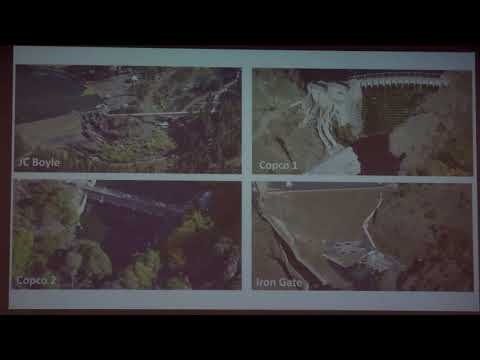
The Klamath dams were originally built for irrigation and hydropower in the early 20th century, Grimshaw said, noting Copco 1 began generating electricity in 1918 and Copco 2 was completed in 1925. He described how dam construction reduced historic river flows (from recorded flows of roughly 800 cubic feet per second in 1908 to about 475 cfs after dams and diversions were in place) and contributed to the near disappearance of salmon in the upper basin by the 1930s.
Grimshaw recounted the 2001 drought-year fish kill, which…
Already have an account? Log in
Subscribe to keep reading
Unlock the rest of this article — and every article on Citizen Portal.
- Unlimited articles
- AI-powered breakdowns of topics, speakers, decisions, and budgets
- Instant alerts when your location has a new meeting
- Follow topics and more locations
- 1,000 AI Insights / month, plus AI Chat