
Council to pilot "cool pavement" in five blocks to reduce summer heat
Get AI-powered insights, summaries, and transcripts
Subscribe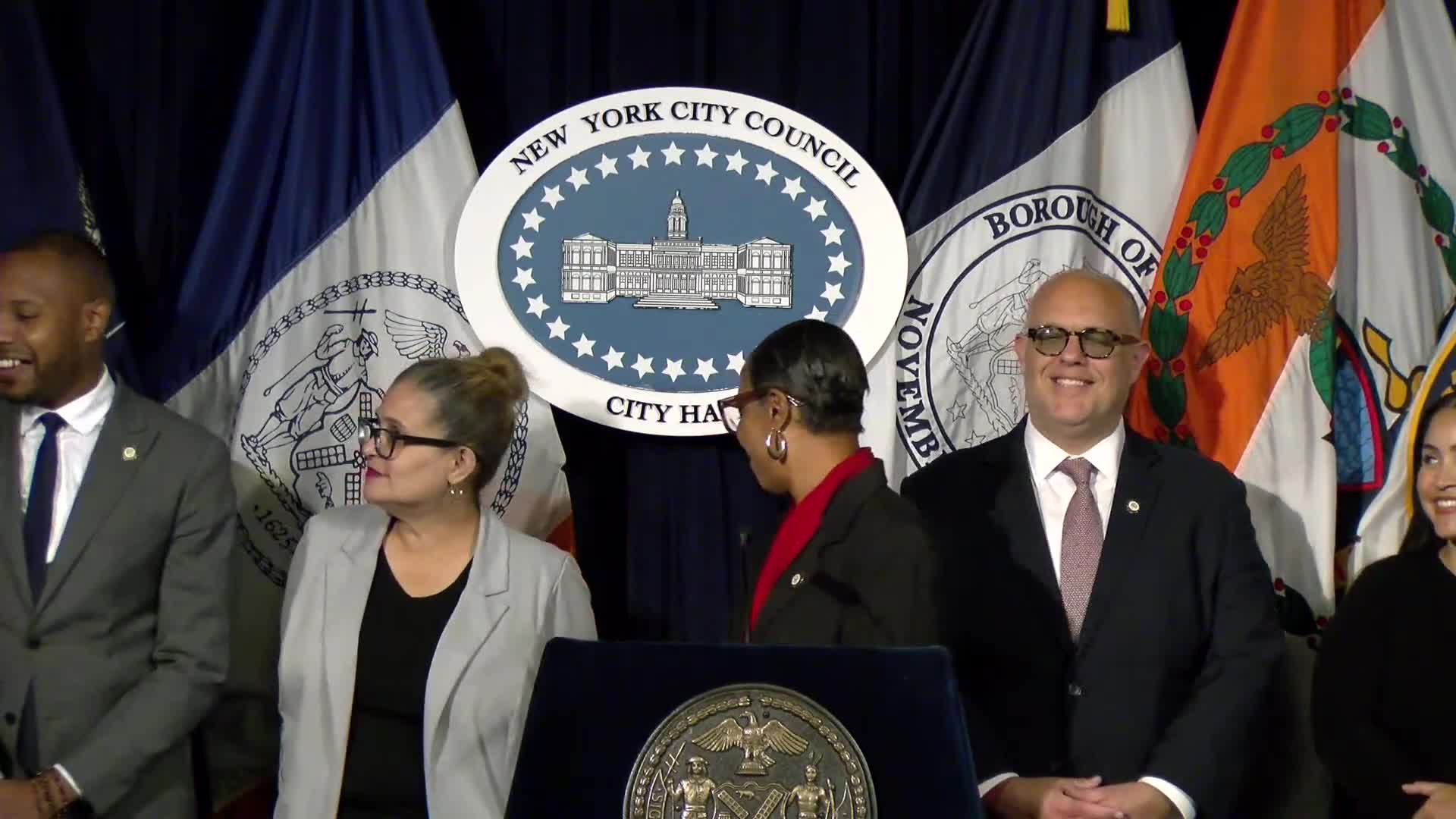
Summary
Council Member Sandy Nurse introduced a two-year pilot to test cool pavement in five high-heat blocks across the city's boroughs, citing examples from other cities and potential temperature reductions; the pilot was placed on the committee docket for a vote.
Council Member Sandy Nurse introduced Intro 9-28b, a bill to launch a two-year pilot study of cool pavement, a topical material applied to asphalt intended to reflect sunlight and reduce surface and neighborhood temperatures.
"For those of you who don't know, cool pavement is essentially a topical material. It comes in like a 5 gallon bucket, and you put it on the road on the asphalt, and it reflects sun and keeps the asphalt from absorbing heat," Nurse said. She cited prior work in Boston and San Antonio and described expected local testing "in 1 in each borough, and it will be in the neighborhoods with the highest summer surface temperatures."
Nurse said San Antonio found surface temperatures fell by about 10 degrees and ambient area temperatures by about 3 degrees on a single block, although she noted the San Antonio program cost about $1 million and that New York's pilot will be limited to five blocks.
"About 500 New Yorkers die every year from extreme heat related illnesses, and so this is an opportunity for us to try something that's low fi, cost effective, cheap," Nurse said, linking the pilot to heat mortality concerns.
The measure was presented for vote consideration on the day's agenda. The transcript does not record a final vote tally or further technical details such as selection criteria for the five blocks beyond the statement that they will be the neighborhoods with the highest summer surface temperatures.
If the pilot proceeds, the council requested results that could inform potential expansion of the program to additional blocks or boroughs.