Get Full Government Meeting Transcripts, Videos, & Alerts Forever!
Get email alerts on the Municipal Budget Millage topic
No spam. Unsubscribe anytime.
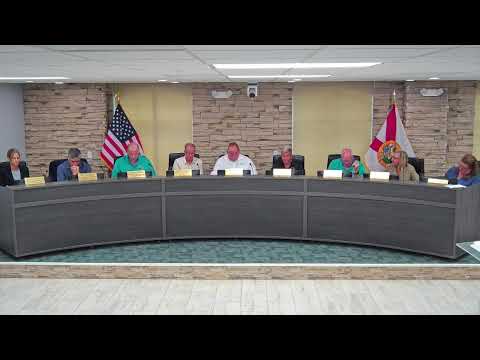
Fort Myers Beach council adopts FY26 budget, sets millage increase after debate over $9M emergency fund shortfall
Summary
The Fort Myers Beach Town Council voted to set a final ad valorem millage and adopt the FY2026 budget after weeks of deliberation. Councilors split over the size of the tax increase but approved a plan that directs new revenue toward the town's emergency reserve and grant-matching funds amid uncertain FEMA reimbursements.
The Fort Myers Beach Town Council voted to set the town's final ad valorem millage and adopt the fiscal year 2026 budget after an extensive presentation by staff and public comment.
Finance Director Joe Onczyk presented the staff's final budget and said the council's adopted millage of 1.0294 mills would generate $177,149 in additional ad valorem revenue; staff recommended splitting that amount roughly in half for the emergency reserve and for grant-matching to pursue state appropriations. Council vote outcomes on related motions were recorded as 4-1, with Councilor King opposed to the tax increases.
Why this matters: the council's decision responds to a roughly $9.04 million shortfall in the town's emergency fund tied to post-Hurricane Ian spending. Staff told council that about $12.2 million in FEMA/FDEM reimbursements remain expected but are not guaranteed; without those reimbursements the town faces continued pressure on reserves and cash flow.
Onczyk and Cassandra Penner, the town's budget manager, walked council through the budget changes since the first public hearing. The council had earlier reduced an initial cap suggestion and instructed staff to tighten expenses; staff then reinstated some items (fireworks, Bay Oaks staffing and sheriff maritime policing) under a 1.15-mill tentative plan but later proposed reallocating most of that additional revenue to the emergency reserve after reviewing fund balances and grant awards.
Town Manager Will (as identified in the meeting) urged caution and said the emergency fund keeps municipal operations resilient during disasters, adding, "Hope is not a strategy," as he urged council to prioritize savings. Onczyk summarized the emergency fund status on the record: the town currently shows a negative emergency-fund balance of about $9,039,000 but staff expects roughly $12,200,000 in reimbursements over the next two to three years. "If we do get the $12,200,000 then we will have almost $3,200,000 in the emergency fund," Onczyk said, later noting that about $2,500,000 of that would be unspent insurance proceeds earmarked for specific repairs, leaving an available balance near $668,000.
Major budget figures and changes presented on the record: - All-funds expenditures for FY26 presented as about $56,000,000. - The FY26 all-funds budget is down roughly $10 million from FY25, driven largely by one-time grants, beach-renourishment work concluding, and capital projects completed or moved out of the FY26 baseline. - Staff reported $1.15 mills would have generated $719,387 in additional ad valorem revenue; the council later adopted a smaller increase, 1.0294 mills, adding $177,149 above the rollback rate. - The rollback rate used in the presentation was stated as 0.8954 mills. - Staff proposed that the $177,149 be split: $88,574 to the emergency fund and $88,575 held for grant-matching for potential state appropriations.
Staff also detailed several grant awards and loan balances that affect the town's fiscal picture: a reported $1,200,000 in state appropriations tied to road, building and stormwater projects (specific line items shown on the budget slides); an available FDEM hurricane-recovery loan of $4,400,000 for pre-approved FEMA projects; and an awarded DEO loan/grant package of $11,900,000 with a remaining balance staff listed as $4,000,000. On the water/stormwater side staff listed multiple State Revolving Fund loans with a combined principal borrowed around $50,000,000 and associated annual debt-service obligations paid from water and stormwater rates.
Council debate emphasized two themes: (1) many residents urged the council to increase the millage to rebuild reserves and protect services; during public comment Ellen Vaughn and another resident urged unanimous approval of an increase. (2) Several council members pressed for evidence that the town had tightened operating expenditures; staff confirmed $1.2 million in belt-tightening measures remain in the budget as previously directed by the council.
Formal actions recorded in the meeting packet and on the public record included motions to set the final millage and to adopt the FY26 budget. The council adopted the final fee schedule separately (see related article). The recorded roll-call votes for the millage and budget items showed four council votes in favor and one opposed (Councilor King), and the adopted budget reflects the smaller millage increase and the emergency-fund/grant-match split described above.
Looking ahead: staff warned that FEMA and state reimbursements can take years to be processed, creating cash-flow timing risks for large capital and recovery projects. The town manager and finance staff told council they would continue to submit projects for reimbursement and return to council if additional budget adjustments are needed.