Get Full Government Meeting Transcripts, Videos, & Alerts Forever!
Get email alerts on the Zoning Code Amendments topic
No spam. Unsubscribe anytime.
City staff propose zoning-code fixes, carve out Erie Boulevard two‑story rule
Summary
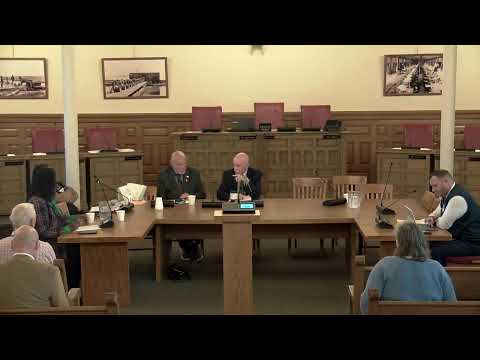
City planning staff presented a package of amendments to Syracuse City’s zoning code at an Economic Development Committee meeting, proposing technical clarifications, measurement rules and limited changes intended to ease application of the code adopted in July 2023.
City planning staff presented a package of amendments to Syracuse City’s zoning code at an Economic Development Committee meeting, proposing technical clarifications, measurement rules and limited changes intended to ease application of the code adopted in July 2023.
Jake, a city planning staff member, said the proposed edits target “real use situations” discovered during two years of applying the new code and aim to help developers, homeowners and businesses use existing buildings without triggering unintended requirements. “This is a real project… Biggie Tire… can't do it right now because the code says 2‑story minimum,” Jake said, describing an applicant blocked from renovating a single‑story building by a minimum‑height provision on Erie Boulevard.
The amendments would carve out Erie Boulevard from a minimum two‑story requirement in the MX2 zone so owners of existing single‑story buildings can renovate and re‑occupy without being forced to add an upper floor. Martha Hertzberg, corporation counsel, said the current language has produced disinvestment by preventing owners from improving buildings because renovations triggered the two‑story rule. “We’re creating disinvestment with this provision,” she said.
Staff emphasized the changes are primarily textual clarifications and operational fixes: revised rules for measuring building stories on sloped streets, added definitions, and the removal of a sunset for a legalized two‑family provision on South Salina that staff said was introduced in a prior amendment round. According to staff, the sunset would have ended next year; the draft removes it so property owners can continue to use that provision.
The package also formalizes a residential‑commercial category (ResCom) intended to address illegal bedroom conversions and overcrowding. The new classification distinguishes owner‑occupied homes that rent a few rooms from properties that operate more like apartments; staff said a homeowner who rents three or more bedrooms would fall into the ResCom category and trigger land‑use requirements such as additional off‑street parking and common‑area standards tied to the state property‑maintenance code. That change, staff said, is aimed at preventing conversions of non‑bedroom spaces (sunrooms, dining rooms, attics) into sleeping rooms without proper inspection and offsets.
On accessory dwelling units (ADUs), councilors raised concerns that the current allowance favors owner‑occupants and limits opportunities for community‑based landlords; staff said that is an item for future conversation and possible legislation. Staff also said most issues raised by Syracuse University about PDD/PDI language were resolved in the current draft, but that signage language remains for the next amendment cycle.
Committee members asked about the variance and appeals process. Staff explained variances operate as site‑specific exceptions and can “run with the land” as use variances do; some requests never reach the Board of Zoning Appeals when they are jurisdictionally outside that board’s authority. In cases where applicants are denied or cannot bring a matter to the board, staff noted an Article 78 judicial review under state law remains an option for aggrieved parties, but staff do not provide legal advice on that route.
Staff said they expect regular amendment cycles — likely annually — to continue refining the code. No final legislative action was taken at the committee meeting; the committee adjourned after the discussion.