
Northampton County district attorney urges local oversight of opioid settlement spending
Get AI-powered insights, summaries, and transcripts
Subscribe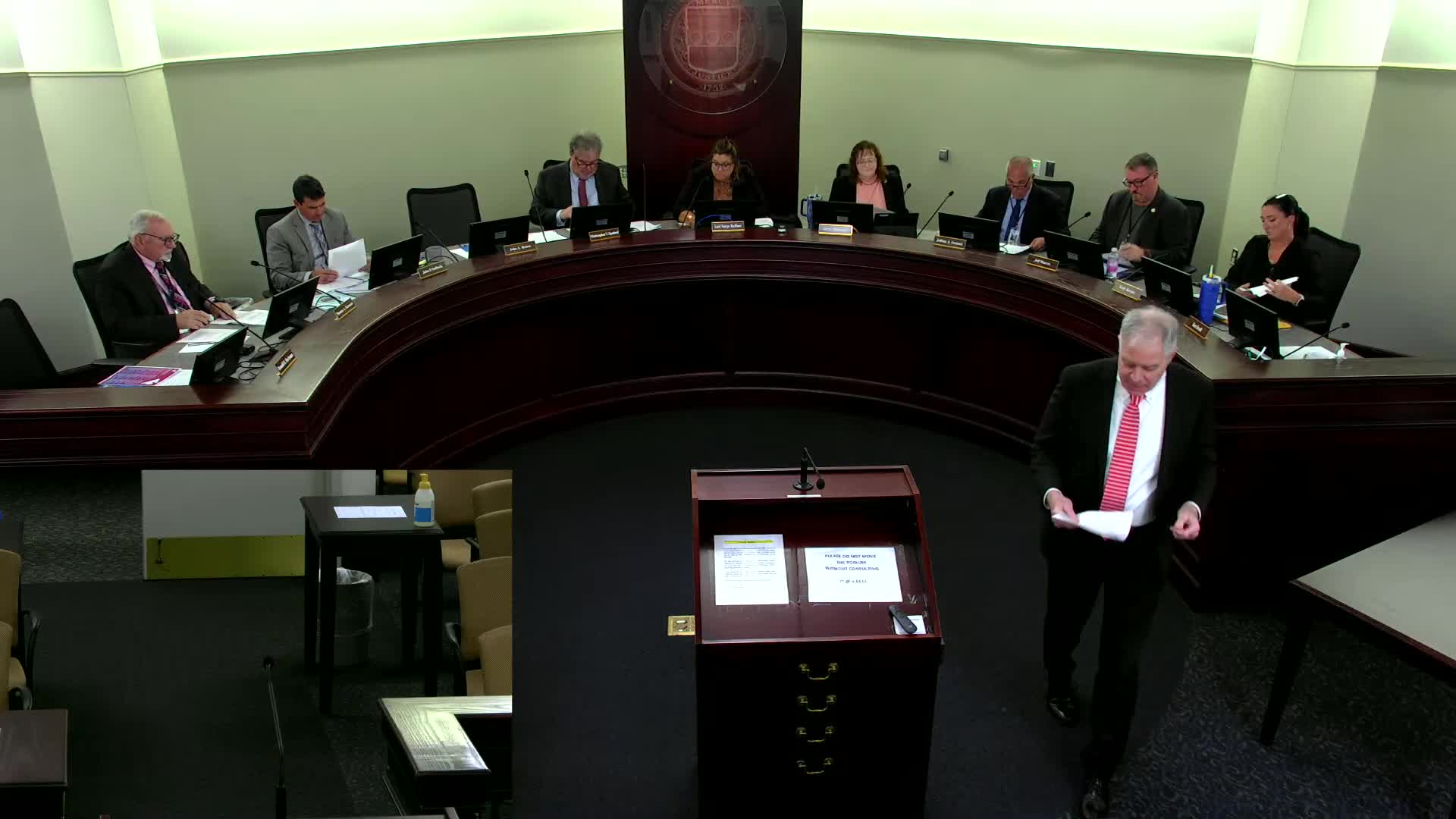
Summary
Northampton County District Attorney told the Human Services Committee the memorandum of understanding that routed opioid settlement payments through the county is not binding on his office and urged more "boots-on-the-ground" spending and a local oversight board as additional settlement funds arrive.
At a Human Services Committee meeting, the Northampton County District Attorney (name not specified) reviewed the county's handling of opioid settlement funds and said the one‑page memorandum of understanding (MOU) that directed settlement payments into the county operating fund is expired or not binding on his successor.
The DA said the national settlement—documented in a multi‑hundred‑page distribution agreement with schedules and exhibits—directed money to abate opioid use disorder through treatment, services, training and community education. He described the MOU reached with his predecessor as a short, informal agreement that anticipated an initial payment of about $2,180,000 and delegated reporting and fee payments to the county.
The DA criticized past spending choices and urged more direct community treatment funding. “I’m more in favor of boots on the ground for this abatement of the opioid issue,” he said, adding that he would have preferred a larger share to go to recovery centers. He said a total of about $4,500,000 has been allocated to Northampton County so far and that roughly half of that has been spent to date.
He described specific distributions he questioned: roughly $330,000 to five recovery centers (which he called "a home run"), about $900,000 paid to a company called Deterra for mail‑out medication deactivation pouches, about $550,000 on an education campaign called “Fake Is Real,” a roughly $150,000 van used for outreach, and about $10,000 for Narcan distribution. He said the pouches, while intended to prevent diversion, represented “an awful lot of money” and questioned their overall effectiveness relative to direct services.
The DA said he does not want to control the opioid funds as District Attorney and described limits within his office—detectives, prosecutors and administrative staff—that make administering service programs impractical without adding personnel. He said the MOU did not reserve the DA a seat on any oversight committee and that he believes the DA should participate in strategy discussions.
Council members and county officials discussed options for more formal local oversight. The DA said the county council could pass an ordinance to create a board that would include council, human services, recovery‑center representatives and other stakeholders to review and approve distributions; he said such an ordinance would be required rather than a resolution if the council wanted to mandate oversight.
Committee members agreed to keep the topic on the agenda for follow‑up next month and invited the DA to sit at future planning discussions. No formal vote or ordinance was taken at the meeting.
Why this matters: opioid settlement funds are sizeable and intended for treatment, prevention and community abatement; county decisions on allocation affect recovery services, prevention and outreach in Northampton County.