
Lauderhill commissioners give mixed evaluations to city manager, city attorney and city clerk
Get AI-powered insights, summaries, and transcripts
Subscribe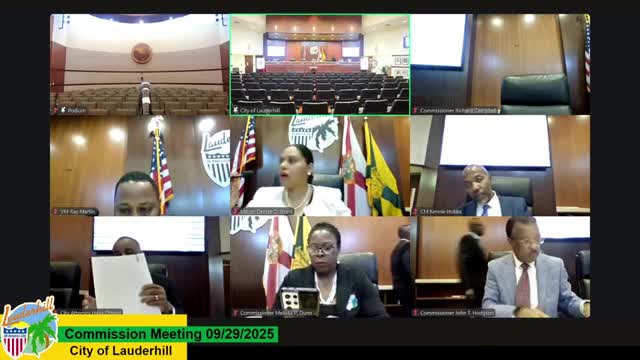
Summary
At a special meeting Sept. 29, the Lauderhill City Commission reviewed annual evaluations for three senior officials, recording generally positive marks but noting areas needing improvement and transitional context for each role.
Commissioners on the Lauderhill City Commission on Sept. 29 reviewed annual performance evaluations for the city manager, the city attorney and the city clerk, recording generally positive scores but citing areas for closer attention.
The commission held a limited-agenda session specifically to discuss employee evaluations. Commissioners reported numeric ratings that ranged from “needs improvement” to “highly effective” across different criteria. The overall tally for City Manager Kenny Hobbs was 3.6 on a 1–4 scale; the city attorney received a 3.52 average; and the city clerk scored 3.88.
Why it matters: these evaluations shape annual personnel assessments, public accountability and any follow-up performance actions staff will take. Commissioners emphasized the transitional context for both Hobbs and the city attorney—each has taken on expanded duties during recent staffing changes—and said that history and funding limits had affected some performance indicators.
Details: - On the city manager: Commissioners praised Hobbs’s diligence and leadership while noting the constraints he inherited, including a budget and policies largely set before he took the role. Vice Mayor Saray Martin and other commissioners said some lower ratings reflected the abruptness of the transition and that they expect the city manager’s “true colors” to show in the next evaluation cycle after he has had time and resources to implement changes. - On the city attorney: Commissioners acknowledged long public-sector experience and described the city attorney’s work as largely positive. One commissioner expressed concern about advice on a late agenda item earlier in the year and said that episode affected their confidence, contributing to lower marks in some categories; other commissioners said the attorney’s overall professionalism and transparency are strong. - On the city clerk: Commissioners recorded higher marks and no public rebuttal from the clerk; the clerk’s overall rating was near “highly effective.”
What commissioners said they want next: the body emphasized follow-up and monitoring rather than immediate personnel action. Multiple commissioners asked that future evaluations reflect the next 12 months after administrators have full access to budgeted resources and stability in staff roles.
No formal disciplinary actions or personnel decisions were taken during the meeting; the evaluations were discussed on the record and entered into the record of the special meeting.