
Downtown parking‑enforcement pilot draws business and disability‑access concerns; city urged to pause vendor deal
Get AI-powered insights, summaries, and transcripts
Subscribe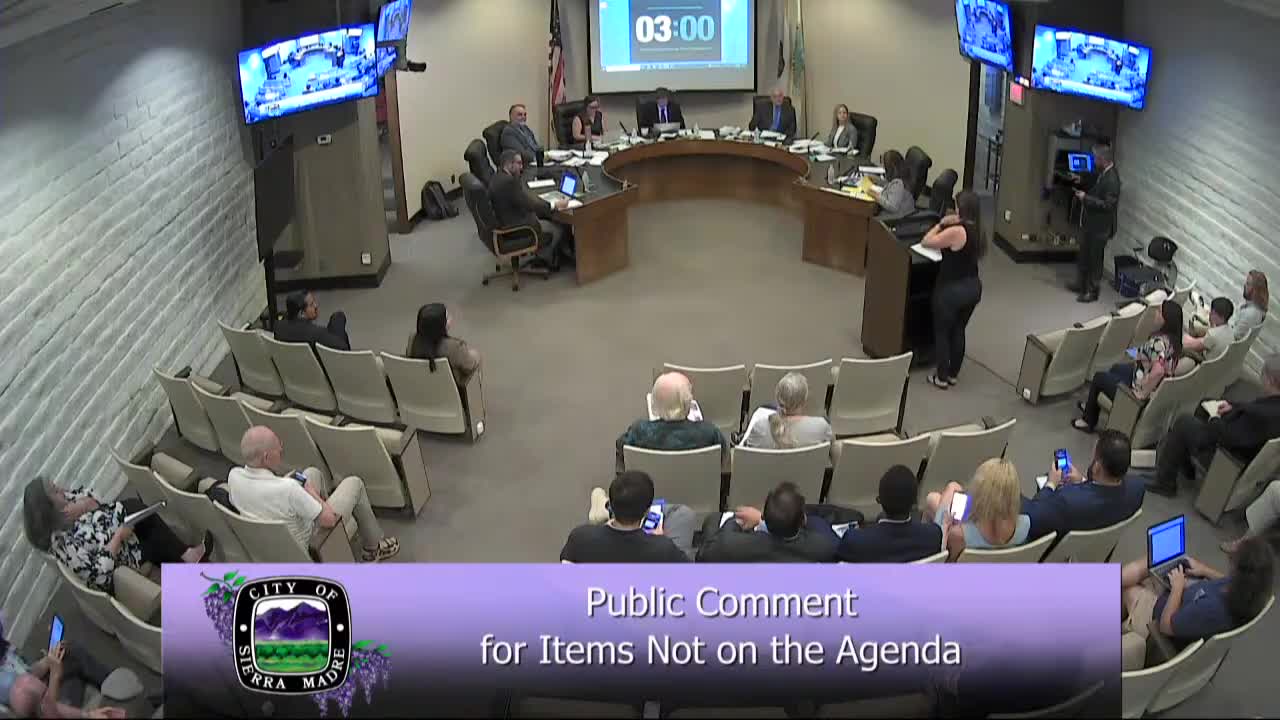
Summary
Business owners, residents and disability‑access advocates pressed the council to slow or pause a proposed automated downtown parking enforcement pilot with Municipal Parking Services (MPS), citing vendor complaints, data‑privacy litigation, ADA compliance and limited outreach.
Business owners and disability‑access specialists urged Sierra Madre council members on Tuesday to step back from a planned automated downtown parking‑enforcement pilot and to give the community more time for outreach and technical review.
Why it matters: The city is preparing a pilot program to expand camera‑based parking enforcement to downtown streets. Supporters say enforcement could increase turnover and ease access for customers and emergency vehicles; critics say the pilot as presented lacks transparency, raises accessibility and privacy questions, and did not allow adequate time for small businesses to participate in planning.
Two downtown stakeholders spoke at the public comment period and asked the council to pause contract negotiations with Municipal Parking Services (MPS). Ashley Bonenfant, a resident and business owner, said MPS has a history of complaints — including an F rating on the Better Business Bureau and a pending class‑action lawsuit the speaker described as involving driver data privacy — and that city outreach to merchants had been limited to short‑notice meetings. “From starting at 8 safety sticks to then ballooning up to a whopping 200, no forethought in the overall effect on local businesses,” Bonenfant said.
Ellie Everett, an attorney and certified access specialist who advised the council on accessibility issues, asked staff to include detailed information before a vote: an accessibility assessment showing which restaurants would lose any portion of their outdoor dining space if safety posts or “sticks” are installed; where removed posts would be stored and who would move them; verification of the vendor’s conformance to Web Content Accessibility Guidelines (WCAG) for the public‑facing website and app; identification of whether the vendor or the city would provide disability accommodations; and a full projected cost‑and‑revenue breakdown for the pilot that accounts for fewer citations after the first 90 days (a vendor condition cited by MPS).
Everett also told councilors the program’s public name — the “support local access pilot program” — was misleading because the project is primarily a parking‑enforcement program.
City staff confirmed council had authorized negotiation of contract terms in May and said they would return to council with final contract language and a recommended outreach plan. No formal action was taken Tuesday; the matter was discussed during public comment and will be returned to staff for follow‑up.
What happens next: Council members asked staff to bring a more complete report back to a future meeting that specifically addresses ADA web and app conformance, vendor complaint history and pending litigation, a detailed outreach timeline for merchants and residents, and the pilot’s projected fiscal impacts.