Get Full Government Meeting Transcripts, Videos, & Alerts Forever!
Get email alerts on the Student Discipline topic
No spam. Unsubscribe anytime.
Oldham County staff review conduct matrix, principal discretion and IDEA rules
Summary
District staff explained the difference between board-established code of conduct and school-level discipline, reviewed a behavior/discipline matrix, and outlined limits on discipline for students with disabilities and required due process steps.
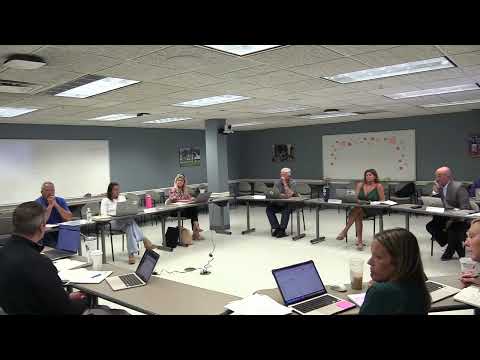
At the Sept. 9 work session, district student-discipline staff presented the board with the district’s code-of-conduct framework, the administrator guidance (the behavior matrix) and how state and federal laws constrain school discipline decisions.
The district presenter told the board the Board of Education sets the code of conduct — the baseline behaviors expected of students — while principals and site-based decision-making councils determine school-level consequences and implement discipline. The presentation emphasized that discipline (penalties or removal from school) is different from behavior expectations and that the superintendent oversees implementation.
Staff walked the board through the district’s behavior matrix and administrative procedures. The matrix lists recommended disciplinary ranges (for example, short-term suspension, multi-day suspension, referral to expulsion procedures) for categories of offenses, and identifies which offenses require School Resource Officer (SRO) involvement or mandatory reporting to state authorities. Staff said the matrix is a guidance tool; the superintendent can set minimums on the matrix unless a specific law overrides it.
Several board members pressed staff on why consequences can differ between schools. The presenter explained that while the board can define which behaviors require discipline, site administrators and SBDM (School-based Decision-Making councils) decide appropriate sanctions and must defend those decisions if appealed. The board was reminded that there is limited direct board authority to mandate identical sanctions at every school, except where state law or a board policy explicitly sets a consequence (for example, weapons or other offenses covered by statute).
Staff explained the district’s special-education obligations: federal IDEA law requires that students with disabilities continue to receive services and that long-term removals require additional protections. Staff said the district cannot expel a student with an Individualized Education Program (IEP) without providing required services; removing a student beyond 10 cumulative school days in a school year triggers additional procedural protections.
The presentation also noted practical constraints when SROs and schools conduct investigations. The presenter said SRO-provided evidence, such as phone data, may not be immediately available to school staff; schools therefore must run concurrent but separate investigations to preserve due process. Staff recommended detailed documentation practices: preserve video, collect written student statements (redacted when shared with parents), and keep secure physical records in fireproof rooms.
Board members asked for more regular reporting and transparency. One asked whether the board could receive monthly reports on major offenses, transfers connected to allegations, and discipline outcomes; staff agreed to provide behavior-data summaries on request but said criminal charges and evidence are handled by SROs and law enforcement.
No formal policy changes or votes were taken; staff said the presentation was intended to clarify existing policy, the matrix’s role, and legal limits on district action.