Get Full Government Meeting Transcripts, Videos, & Alerts Forever!
Get email alerts on the Trees And Ordinance Review topic
No spam. Unsubscribe anytime.
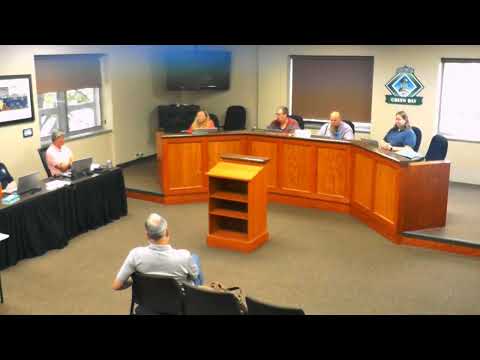
Committee refers city tree-removal ordinance to staff after concerns over dual fines, transparency
Summary
A Green Bay committee voted to refer a proposed review of the city’s tree-removal ordinance and related policy to staff, after members said the ordinance and a separate tree-appraisal policy are unclear and can lead to overlapping penalties.
A Green Bay committee voted to refer a proposed review of the city’s tree-removal ordinance and related policy to staff, after members said the ordinance and a separate tree-appraisal policy are unclear and can lead to overlapping penalties.
The motion to refer the matter to staff passed on a voice vote after members discussed whether the city should combine the policy into Ordinance 28.37 or otherwise publish clearer guidance on how removal penalties and appraisal charges are calculated.
Why it matters: Committee members said homeowners can face both a citation for unauthorized removal and a separate invoice for the appraised value of a removed city tree. Several members called that practice confusing and asked for clearer, public information about the appraisal formula and the circumstances when both penalties apply.
Committee discussion and context
Alder Eck said the policy and ordinance should be “married together,” adding, “I feel like it should somehow be married together… I would probably go with the higher amount, not the fee chart as much as the citation fee is the charge of the tree itself.”
The director outlined options for the committee without Alder Johnson present: refer to the next committee meeting, ask staff to follow up with Alder Johnson and bring recommendations back, or receive and place the item on hold. The director told the committee he had highlighted sections of the ordinance and included the city’s unauthorized tree-removal policy in the agenda packet.
Brian, the city forester, explained why the city sometimes issues both a citation and a separate appraisal charge: “If somebody wants to widen their driveway, and there's a tree right in the location where they wanna widen it… the two defined and then the tree appraisal are separate because of that reason.” He compared it to a traffic accident where an operator receives a moving citation and is also liable for damage.
On when the citation is applied, the forester said intent matters: “If it's malicious intent… there's a citation that's issued for that plus the loss of value to the city because it's a part of the infrastructure.” He also said the city applies removal criteria for dead, dying, diseased or dangerous trees and will remove those without fee.
Committee members pressed for transparency on how the dollar amount for tree appraisals is calculated. The director and forester described the appraisal method as a formula-based approach that measures trunk diameter and applies deductions for condition and location; the forester said the method has been in use since 1951 and is accepted by courts and insurers.
Action and next steps
The committee approved a motion to refer the ordinance and policy review to staff so that staff can draft recommended ordinance language or public information clarifying when citations versus appraised-value charges apply and how appraisals are calculated. The director and forester were asked to work with legal and other departments on proposed revisions and to return with recommendations to the committee.
Formal action recorded
A motion to refer the item to staff was moved and seconded and carried by voice vote (committee recorded “Aye”; no oppositions were voiced). The committee’s vote will be a recommendation to the Common Council for final approval if ordinance changes are proposed.
Ending
Committee members said they expect staff to clarify the relationship between ordinance text and the city’s removal policy, publish or otherwise make transparent the appraisal factors the city uses, and propose language that reduces the risk of overlapping penalties. The item will return to the committee after staff prepares recommendations.