Get Full Government Meeting Transcripts, Videos, & Alerts Forever!
Get email alerts on the School Fees Transportation topic
No spam. Unsubscribe anytime.
Oldham County board weighs reducing student fees, covering travel when teams advance
Summary
Board members discussed standardizing basic and technology fees across schools, whether the district should cover regional/state travel and officials, and how rising transportation and officiating costs shift costs onto families and fundraisers.
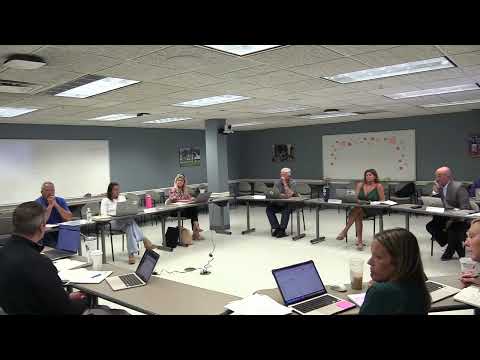
At a special work session on Sept. 9, 2054, the Oldham County Board of Education discussed whether the district should reduce or standardize student fees and whether it should cover transportation costs when school teams advance beyond district-level competition.
Board members and staff raised concerns about increasing transportation and officiating costs and uneven fee practices across the district’s three traditional high schools. Board members asked staff to assemble three years of collections for the “basic” student fee and the technology fee by school so the board can see how much fee revenue each school actually collects.
School staff described that athletic travel and game-day costs have increased in recent years because of higher transportation costs and fewer available game officials. “Transportation plus that’s not… the team that use it, it’s expensive,” a board speaker said while discussing longer trips and drivers’ overtime. Staff said drivers’ pay ranges from about $15 to $30 per hour, plus overtime; round trips for some contests can be 60 to 70 miles and take four to eight hours, sometimes longer for weekend regional events.
Board members discussed several policy options rather than voting on a change. Suggestions included: (1) standardize top-line fees so the same baseline applies at each school, (2) consider a district subsidy for teams that qualify for state-level competition (staff said the state typically keeps gate and concession revenue at state-level events and provides only small per-diem allowances), and (3) use year-end surplus or contingency funds to cover technology or basic fees temporarily.
Several board members emphasized equity concerns. One board speaker urged focusing first on the “basic” student fee and the technology fee because those vary by school and because families most frequently complain about them. Staff outlined current ranges: middle-school basic + tech fees run roughly $40–$55 depending on school; high-school basic and tech fees were described as typically collected around $60 total but can vary depending on course-specific costs (AP, pathway courses, lab fees). For students eligible for free or reduced-price meals, fees are waived.
On athletic travel specifics, staff said the district currently covers state tournament travel in limited fashion (for the past two years) but does not routinely cover regional travel; principals and the board could change that if the board chooses. Staff also said some event revenue-sharing arrangements at regional sites help offset travel costs, but “when it comes to the state tournament ... the state takes all that money and keeps all that money,” and the district typically receives only small per-diem assistance.
Board members directed staff to return with more detailed financial data and options. Specifically, they asked for three-year per-school totals for basic and technology fees collected, a projection of how much it would cost the district to pick up those top-line fees across all schools, and an estimate of additional transportation and bus-purchase implications if the district expands travel coverage.
The discussion was exploratory; there were no formal motions or votes.
Board members said next steps will include staff reports on three-year fee collections and potential budget scenarios so the board can consider whether to adopt a short-term relief plan or a longer-term fee policy change.