Get Full Government Meeting Transcripts, Videos, & Alerts Forever!
Get email alerts on the Mediation Complaints topic
No spam. Unsubscribe anytime.
Green Bay commission backs staff review of mediation process for discrimination complaints
Summary
The Green Bay Equal Rights Commission discussed creating a local mediation step for written complaints under Chapter 12 of the city's civil rights ordinance and voted to refer questions to staff and the city attorney for feasibility and limits of the commission's role.
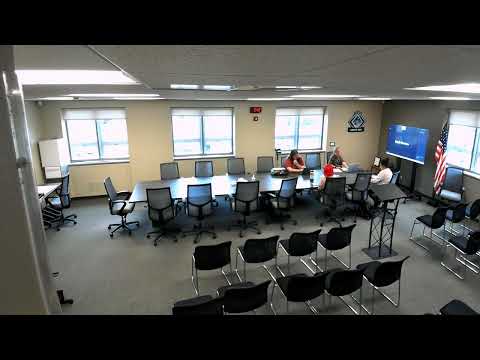
The Green Bay Equal Rights Commission on Sept. 11 discussed creating a mediation process to handle written complaints alleging discriminatory practices under Chapter 12 of the city's civil rights ordinance and voted to refer detailed questions to staff and the assistant city attorney for guidance.
Commissioners said the goal would be to find interventions before cases enter formal legal channels and public records in ways that can make housing and employment harder to obtain. Assistant City Attorney Logan Wood told the commission that complaints now filed with the city clerk are reviewed and routed by the city attorney's office and, when appropriate, referred to external agencies such as HUD or the EEOC.
Commissioners described two possible models: a limited advisory hub that helps complainants complete forms and navigates referrals to state or federal agencies, and a more formal local mediation process that could resolve matters before they become part of a public legal record. Commissioners noted that external fair-housing intake can take many months; one speaker cited a personal account that HUD took about nine months to respond to a landlord complaint, arguing that a faster local option could be valuable.
Several commissioners and community-focused speakers emphasized barriers to filing complaints'language access, lack of witnesses and digital access'and suggested the commission could help by centralizing multilingual intake information, distributing printed materials to resource centers and advising complainants on options. Commissioners repeatedly said they would seek legal guidance on what the commission can and cannot do formally'for example, whether the commission can accept complaints before they reach the clerk, whether it can mediate without subpoena power and how to protect complainants from possible retaliation.
After discussion the commission made a motion to refer the list of specific questions to staff and to Assistant City Attorney Logan Wood for review and returned recommendations; the motion was adopted by voice vote.
The referral asks staff and law to outline the commission's feasible role, whether a mediation step could be implemented, and what intake or advisory services the commission could lawfully provide. Commissioners said the next steps should include preparing a set of specific procedural options for legal review and considering how to make intake materials accessible in multiple languages and in paper form at community resource centers.