
Carlisle council votes to draft, advertise 'Community Trust' local autonomy ordinance after hours of public comment
Get AI-powered insights, summaries, and transcripts
Subscribe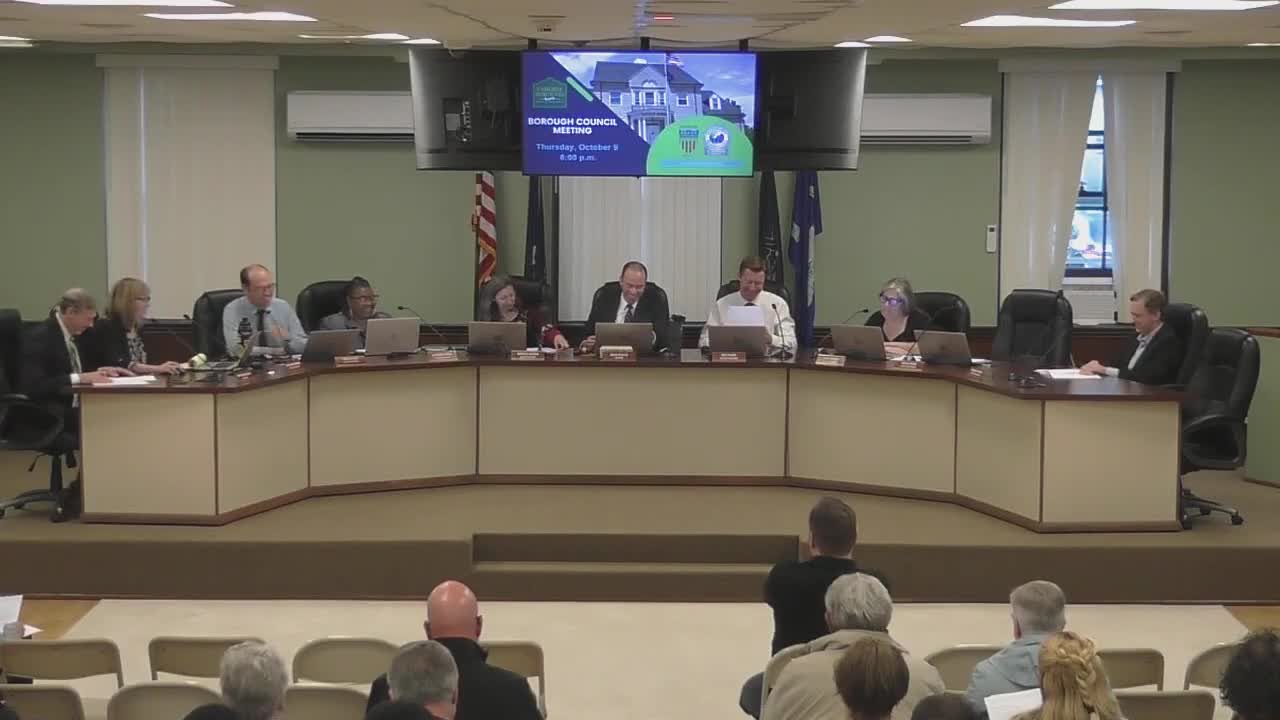
Summary
After extended public comment and council debate, Carlisle Borough Council voted 6-1 to direct the borough solicitor to draft and advertise a Carlisle Community Trust and Local Autonomy ordinance for consideration at a future meeting, formalizing existing local policies on immigration-related cooperation.
Carlisle Borough Council on Oct. 9 voted to direct the borough solicitor to draft and advertise a Carlisle Community Trust and Local Autonomy ordinance, setting the matter up for consideration at the Nov. 13 council meeting.
The ordinance, as described by Mayor Sean M. Schultz, would "affirm our commitment to local governance, community trust, and the efficient use of rural resources" and would "ensure that our borough agents do not act on civil detainer requests or administrative warrants unless required by a judicial warrant or a court order." The motion to draft and advertise the ordinance was made by Councilor Charles and seconded by Councilor Perry; the measure passed 6-1.
The vote followed more than two hours of public comment and a council discussion that ranged from legal and operational questions to concerns about potential federal retaliation. Councilor Noah said the borough already has concrete expectations for staff conduct and suggested the issue could be put to voters by referendum under the borough's home rule charter. "While many...expressed enthusiastic support for this ordinance," Noah said, "there is also a large number who oppose it," and he encouraged using the charter's referendum process.
Supporters at the podium urged the council to act now. Dickinson College law student Devin Spiva told councilors the ordinance would "show the commitment of Carlisle to everyone who lives within its borders," arguing it would encourage immigrants to participate in civil life and report crimes. Student and community speakers cited events in other cities and said they feared unnecessary cooperation between local law enforcement and federal immigration actions. Resident Pia Mancini said recent federal enforcement made the matter urgent: "This is a really important action to ensure that people can feel that way and can have the protection that they need from the government, from our local government."
Opponents warned that formalizing the policy could draw federal attention and risk the borough's federal funding streams. Longtime resident Dodie Wise said she is "not in support of the resolution or ordinance that will make us engage in any type of activity where the police are not asked to help federal law enforcement and go against the law of the land." Mayor Schultz reiterated the borough's position that its police already exercise discretion, saying officers "do not ask about immigration status unless it is directly relevant to a criminal investigation." He also stated, "If our police officers have probable cause to arrest, they will do so. Whether the individual is a citizen, a documented immigrant, or an undocumented immigrant, they will face the consequences of their actions."
Council discussion repeatedly returned to two practical questions: (1) whether codifying existing practice would materially change police conduct and (2) whether passing an ordinance could prompt targeted federal enforcement or loss of grant funding. Councilor Mellon urged caution, citing the possibility of "retaliatory action by the federal government" that could affect borough grants and projects; she voted against the motion.
The ordinance text discussed by councilors would explicitly state that borough employees should not act on civil immigration detainers or administrative warrants without a judicial warrant or court order and would reaffirm local home-rule authority. The council's action at the Oct. 9 meeting was to instruct the solicitor to prepare the ordinance for advertisement and public consideration. A formal enactment vote would occur at a later meeting after the required advertisement period.
The council recorded the motion to draft and advertise the ordinance as approved by a 6-1 vote. The record does not list individual roll-call votes in the transcript; the final stated result was "motion carries 6 to 1."