Get Full Government Meeting Transcripts, Videos, & Alerts Forever!
Get email alerts on the Local Taxes Inside Millage topic
No spam. Unsubscribe anytime.
Sunbury council pursues three-year plan to phase out “inside millage” if state eliminates it
Summary
Councilmembers and the mayor discussed a proposed three-year plan to reduce and ultimately eliminate the city’s inside millage after a state bill threatened that revenue; staff will model expenditure cuts and revenue options before any formal change.
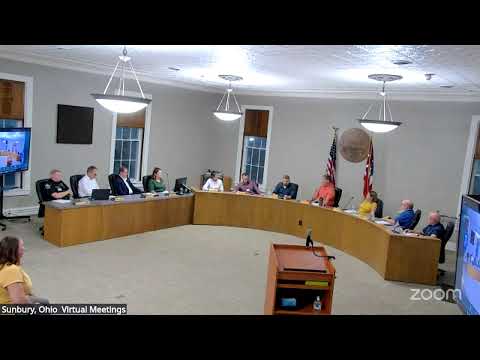
Sunbury council members on Aug. 20 said they will prepare a three-year plan to reduce and ultimately eliminate the city’s “inside millage” — a component of local real estate tax — if a pending state bill removes the city’s authority to collect that revenue.
The discussion followed a finance committee meeting during which members and staff reviewed how the city would respond if the state eliminated inside millage. Mayor St. John said the council will move “towards a proactive approach, which would be a proposal, 3 year plan to reduce expenditures” and to phase out the charge over time.
The plan, as described in the meeting, would task staff with identifying expenditure reductions and revenue options so the city does not absorb an abrupt, single-year loss of revenue. “I don’t think cutting off 11% of your revenue or 10% of your revenue in 1 year is a very effective strategy,” the mayor said, adding that a multi-year “burn down” is a more responsible path.
Councilmembers and staff noted the discussion was prompted in part by a state-level proposal — referenced in the meeting as a House bill (referred to in the transcript as “house bill 335”) — that would abolish inside millage for municipalities, counties, school districts and townships. Speakers said they opposed a one-size-fits-all state mandate and want local control over the timing and pace of any tax reduction.
Finance staff will produce detailed scenarios showing the effects of revenue reductions — including modeled cuts across personnel, capital investments, benefits and wages — and the committee will continue work on the three-year plan before bringing any ordinance or formal tax-change proposal back to council for action.
No ordinance or vote to change the rate occurred at the Aug. 20 meeting; the item was presented as committee direction to prepare a plan and additional analysis.
The mayor and finance committee repeatedly emphasized that the three-year proposal is intended to give the city time to adapt, consider growth rates and debt positions, and avoid sudden cuts that could impair services.