Get Full Government Meeting Transcripts, Videos, & Alerts Forever!
Get email alerts on the Master Plan Update topic
No spam. Unsubscribe anytime.
Planning Commission recommends distribution of draft master plan amid debate over Gaslight Village details
Summary
The commission voted to recommend that the City Commission distribute a draft update of the East Grand Rapids master plan for a 42-day review; the draft adds guidance on mobility, nonconformities, and carbon-neutrality goals for city operations, but some public commenters urged omission of detailed developer concept graphics for Gaslight Village.
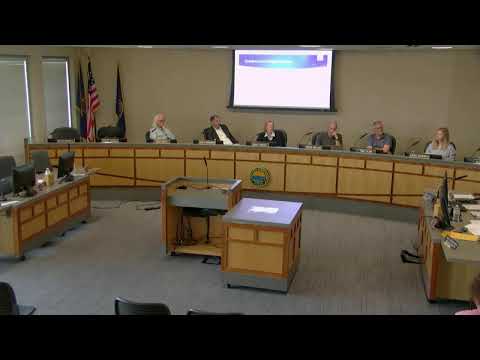
The East Grand Rapids Planning Commission on May 20 voted to recommend that the City Commission authorize distribution of a draft update to the city's master plan, beginning the public and interjurisdictional review period required under state law.
Paul LeBlanc, the city planning consultant, presented an updated draft that adds new language and maps on mobility and complete streets, strengthens discussion of nonconforming lots and zoning options, and inserts a reference to the city's goal of achieving carbon neutrality in city operations by 2040. LeBlanc said the draft remains editable and that the distribution recommendation would start a roughly 42-day review period during which neighboring jurisdictions, utilities and other agencies could submit comments.
The draft also includes conceptual illustrations for the Gaslight Village site; that material prompted public comment and internal debate. Judith Baxter, speaking for a neighborhood group calling itself Save East GR, asked the commission to remove the detailed Gaslight Investors concept graphics from the draft, arguing they"give the appearance that the plan has been approved regardless of what the language is or what your intent is." The commission and staff discussed keeping conceptual bubbles while removing language that could be read as endorsement; Paul LeBlanc said the draft wording was softened from earlier versions to clarify the concept has been reviewed but not approved.
LeBlanc said the planning team expanded master-plan recommendations to address accessibility (including for people with mobility challenges), improved outreach about property-maintenance enforcement, and ideas to encourage infill along Wealthy Street while noting existing lease or ownership constraints in the Gaslight Village area. He also said staff mapped concentrations of nonconforming lot sizes across the city and added guidance on possible approaches such as new zoning districts, amendments to existing districts, or rezoning in targeted locations.
Commissioners and staff discussed the timing and mechanics of the review: if the City Commission authorizes distribution, the 42-day clock begins when staff sends the draft to neighboring jurisdictions and relevant agencies. LeBlanc and staff said the draft will be posted on the city's website during the review and that public comments may be submitted online; the planning team will compile any comments and return to the planning commission for consideration before the final plan returns to the City Commission for adoption.
Commissioners emphasized the draft is not a final adoption. LeBlanc described the process under state law as giving surrounding communities an opportunity to comment; staff noted it is uncommon for neighboring jurisdictions to submit comments but that the statutory review period must be respected. The commission approved a motion recommending the City Commission authorize distribution of the draft with the changes noted in the meeting; the motion carried on a voice vote.
During the meeting commissioners also raised related items to be tracked in the master plan process: the inclusion of the Gaslight Investors concept only as a conceptual illustration, potential future study of a citywide community-level climate action goal (beyond the city-operations goal referenced in the draft), and expanded narrative about mobility and enforcement trends (staff provided enforcement data showing a post-COVID dip in traffic enforcement that has since returned toward pre-pandemic levels).
Public engagement on the draft will include the posted draft and an online comment form during the statutory review period; staff said they will report back to the planning commission with any comments received and recommended edits for the planning commission’s next review.