Get Full Government Meeting Transcripts, Videos, & Alerts Forever!
Get email alerts on the Land Use Gaslight Pud topic
No spam. Unsubscribe anytime.
Residents press City Commission on Gaslight Village as commission approves draft master plan distribution for intergovernmental review
Summary
Dozens of East Grand Rapids residents urged caution on the Gaslight Village development, while the City Commission authorized distributing a draft master plan to neighboring jurisdictions and agencies for the mandatory 42‑day review under the Michigan Planning Enabling Act.
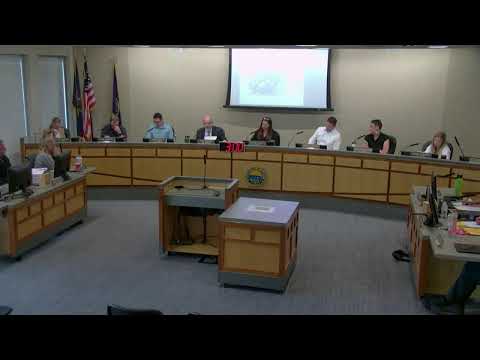
At a City Commission meeting in East Grand Rapids, residents and commissioners spent the bulk of public comment urging more study and transparency on the proposed Gaslight Village planned unit development and related zoning changes, while the commission voted to distribute a draft update of the city’s master plan to neighboring communities and state and regional agencies for a mandatory 42‑day review.
The master plan item matters because the draft will guide land‑use policy in four focus areas — including Gaslight Village — and distribution triggers the 42‑day comment period required by the Michigan Planning Enabling Act. Zoning Administrator Jay Giannotti told commissioners the draft reflects more than a year of public engagement and five Planning Commission work sessions; planning consultant Paul LeBlanc said the draft updates demographics using 2020–2023 data and would be adopted as an amendment to the 2018 plan.
During public comment, dozens of residents described the Gaslight Village concept plan as too dense, inadequately studied for traffic and parking impacts, and insufficiently transparent. John Kornowski, a resident within 1,000 feet of the project, said the plan “seemed to lack an accommodation for green space” and expressed concern about four‑ and five‑story buildings and missing traffic, bicycle and pedestrian studies. Nancy Patterson and others asked why the proposal would allow heights greater than two‑and‑a‑half stories, reduce parking below typical standards and potentially offer tax incentives to the developer. Suzanne McCarty cited the packet’s comment summary (151 letters: 18 in favor, 103 opposed, remainder with questions) and said the data “suggests that the community does not accept this plan.”
Several residents also warned of legal and financial risks. A speaker who identified examples of litigation in other Michigan cities said developers have used lawsuits to press localities and urged the commission not to “tie the developer down” only after concept approval. Tom Miller and Nile Deems urged the commission to delay concept approval until the city has complete traffic, parking and environmental studies; Deems warned that a conceptual approval creates a developer expectation under the PUD ordinance that can reduce the city’s bargaining position later.
Commissioners said they heard the concerns. Commissioner Hunter asked staff to provide more detail on density and the brownfield financial analysis before any final approvals; Hunter said he would not support concept plan approval until the city has the brownfield and financial feasibility information. Another commissioner proposed a series of public work sessions so the commission could review the PUD standards, discuss subjective terms in the ordinance such as “essential character,” and collectively identify conditions that would be tied to any approval.
On the master plan distribution, the commission moved and approved sending the draft to neighboring jurisdictions and relevant agencies for the statutorily required 42‑day review (the staff memo noted a comment deadline of July 14). Commissioners and staff agreed to tighten language in the draft to avoid implying that any particular PUD or developer plan has already been approved; staff said minor language edits could be made administratively before distribution. Paul LeBlanc and Jay Giannotti said they would collect and return comments to the Planning Commission and then present a revised final draft, ideally at a joint session of the Planning Commission and City Commission before a public hearing and formal adoption.
The commission’s authorization does not adopt the master plan — it only begins the statutorily required intergovernmental review. Final adoption will be a separate step after the comment period, consultant revisions and any required Planning Commission hearings.
Residents and several commissioners asked that key technical studies (traffic counts, parking analysis, brownfield financial plan, and related fiscal analyses) be completed and shared before any vote on a concept plan so the commission can base decisions on the full body of information. The master plan distribution will bring formal written comments from neighboring jurisdictions and agencies for staff and the Planning Commission to address before a final adoption vote.