
TCDRS update: Wichita County plan 90.4% funded; court to review elected rate later this year
Get AI-powered insights, summaries, and transcripts
Subscribe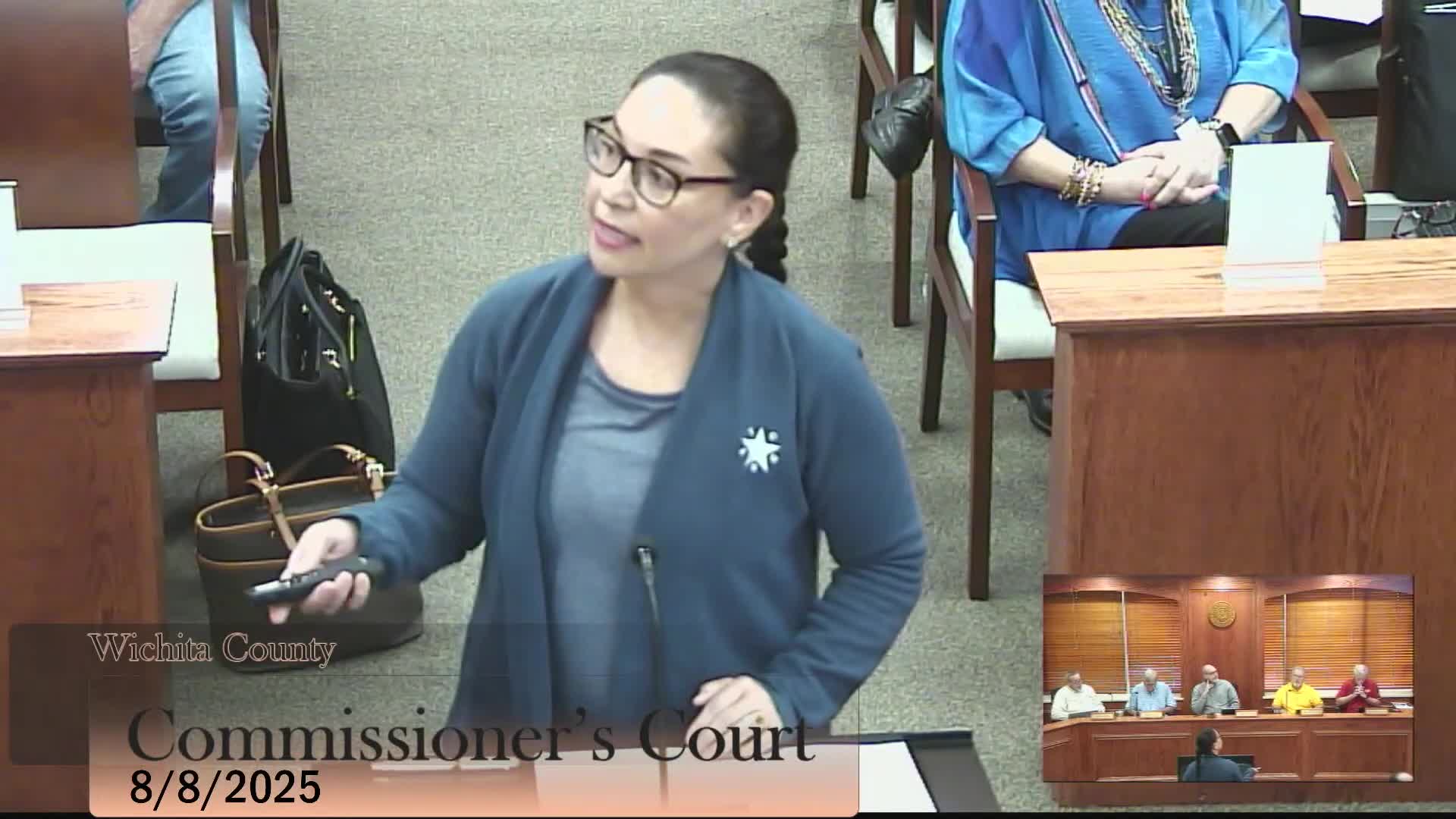
Summary
Erica Aguilar Vasquez of the Texas County & District Retirement System told the Wichita County Commissioners Court the county's plan is more than 90% funded after recent investment gains and discussed employer choices over elected rates and benefit options.
Erica Aguilar Vasquez, a TCDRS representative, delivered an annual update to the Wichita County Commissioners Court on Aug. 8 and reported the county’s retirement plan funding and benefit options.
“TC DRS is 90% funded as a system. But if I include our reserves, we’re 97% funded with our reserves,” Aguilar Vasquez said, citing the statewide plan’s assets and reserve position. She told the court TCDRS manages about $51 billion in assets and that the system aims for a long-term investment return target of 7.5%.
Aguilar Vasquez reviewed plan mechanics specific to Wichita County: members contribute 7% of pay into individually tracked accounts that earn statutory 7% compound interest; employers (the court) choose an elected rate that supplements the match and can adjust that rate annually. She told the court Wichita County currently pays a 14% elected rate and that the county’s plan is roughly 90.4% funded as of the presentation.
The presenter explained vesting, eligibility and benefit design features that distinguish TCDRS as a hybrid plan (elements of defined benefit and defined contribution). She also described optional features the court may adopt, including partial lump-sum payout options for retirees and optional group term life insurance for active employees or retirees.
Judge and commissioners discussed whether to lower the elected rate from 14% to 13% or 13.5%. Aguilar Vasquez said the court can make changes and that if it decides to change the elected rate the county must notify TCDRS before mid-December for changes to take effect Jan. 1 of the following year. She said the county has flexibility and that changes to vesting periods or other permanent benefit choices would be permanent and nonrescindable.
Nut graf: The TCDRS briefing showed Wichita County’s retirement plan at stronger funding levels after recently passed investment gains and reserves; commissioners discussed whether to lower the county’s elected contribution rate but made no formal decision at the meeting.
Discussion items included the county’s demographic profile (average employee age about 43, average years of service about 10), replacement ratios (a 30-year career replaces an estimated 85% of salary under plan parameters provided), and the board governance structure (appointed by governor and approved by senate). Aguilar Vasquez offered to provide the court with updated projections if commissioners want to revisit the elected rate before the December deadline.
No vote was taken; the court received the presentation and asked staff to review numbers for future consideration.