Lone Star PACE presents 2024 results, highlights Wichita County projects including Panda Biotech
August 08, 2025 | Wichita County, Texas
This article was created by AI summarizing key points discussed. AI makes mistakes, so for full details and context, please refer to the video of the full meeting. Please report any errors so we can fix them. Report an error »
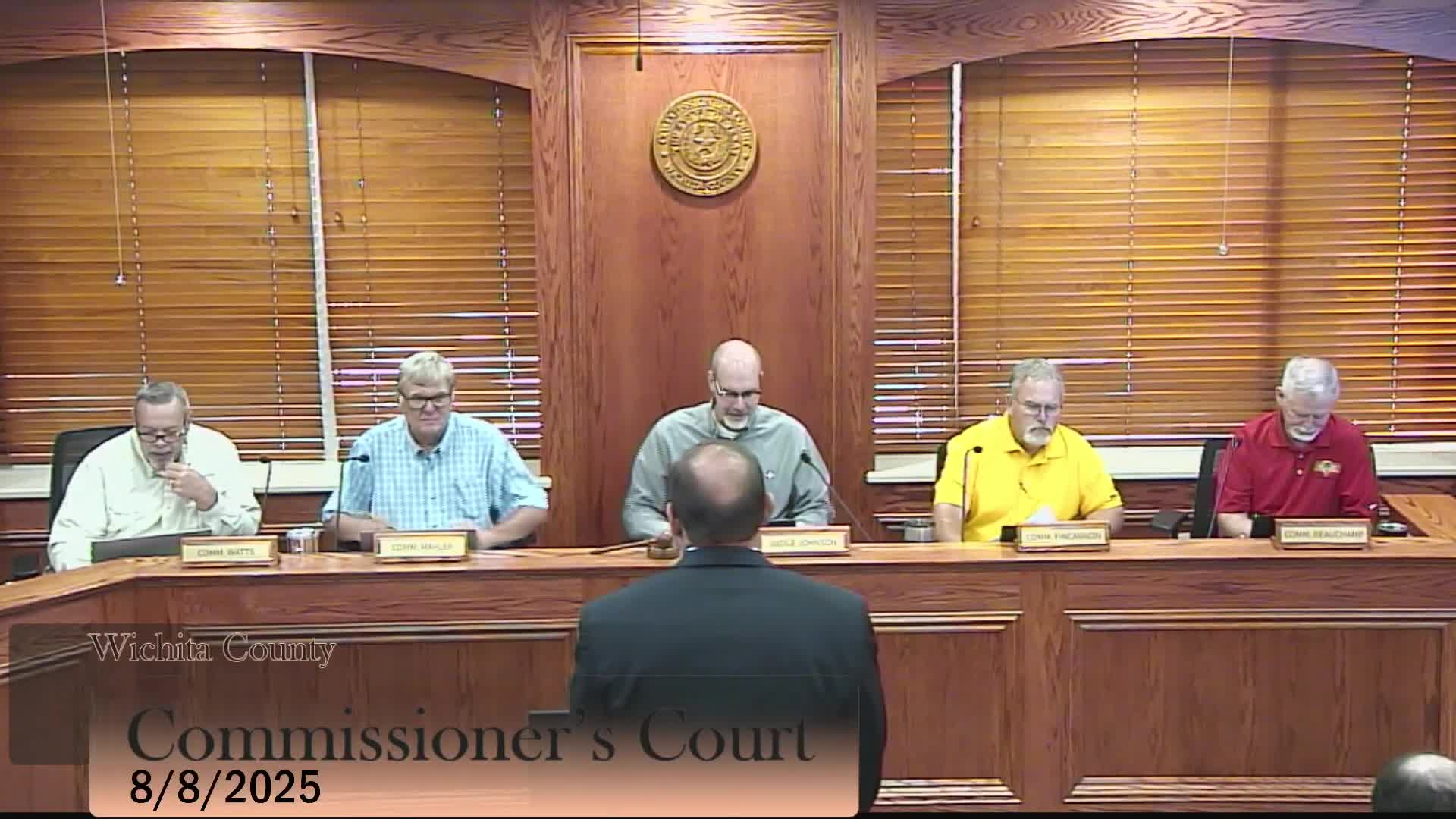
The program administrator’s presentation explained why local governments participate: PACE is long-term, private financing attached to a property tax-style assessment rather than public debt. “No public money involved, or administration,” Lee McCormick of Lone Star PACE said.
Lone Star PACE told the court it has closed almost $350 million of PACE financing in Texas and that the product fills gaps in developers’ capital stacks created when senior lenders reduce loan-to-cost ratios. McCormick described PACE as “long term, low cost financing for projects that implement energy or water efficiency improvements,” saying new construction typically qualifies only if developers build at least 5% above code and that roughly 30–35% of a new-build capital stack can be financed with PACE in many cases.
The presenter highlighted local examples. He described the Painted BioTech repurposing of the former GM Delphi facility (a $13 million PACE project), and earlier Wichita County transactions: a Maverick on Seymour multifamily rehab (about $1.3 million) and Maureen Street Apartments. McCormick also referenced a Panda Biotech project in Wichita County among the 2024 portfolio.
McCormick gave numbers for last year’s activity statewide: utility savings from 2024 projects of roughly 7.2 million kilowatt-hours and about 6.9 million gallons of water annually. He said Lone Star PACE’s outreach in 2024 included nearly 300 in-person meetings, webinars and media impressions to raise developer awareness. He noted Lone Star PACE itself does not provide capital; it connects projects with more than 20 capital providers in its network.
Commissioners asked about underused market segments; McCormick recommended multifamily and hospitality for efficiency gains and said industrial adoption has potential but is harder to reach. Commissioners also asked whether data centers may use PACE; McCormick said there is interest but many data-center developers have other capital options and must be convinced to add PACE to their capital stack.
Nut graf: The presentation framed PACE as a tool Wichita County can use to encourage energy and water efficiency in private commercial and multifamily projects without county capital outlay; the court heard details about local projects that have already used the program and about outreach and lender relationships Lone Star PACE maintains.
Discussion points included the mechanics of PACE assessments (a property-level lien similar to ad valorem tax), typical qualifying improvements (HVAC, lighting, building envelope, plumbing), and examples of expected reductions in utility use. McCormick said PACE can lower the weighted average cost of capital for a project (from his example figures of roughly 11.5% down to about 9.5%) and can be amortized over 20–30 years.
No formal action was taken at the court meeting. The presentation was received by the court and presenters left the meeting after questions.
View the Full Meeting & All Its Details
This article offers just a summary. Unlock complete video, transcripts, and insights as a Founder Member.
30-day money-back guarantee
Sponsors
Proudly supported by sponsors who keep Texas articles free in 2025

