Get Full Government Meeting Transcripts, Videos, & Alerts Forever!
Get email alerts on the Vehicle Noise topic
No spam. Unsubscribe anytime.
Committee postpones revised vehicle-noise ordinance after extensive public comment
Summary
The committee postponed consideration of a proposed ordinance to revise vehicle muffler and excessive-noise rules for two weeks after hours of testimony from residents, car clubs and law enforcement; the draft would codify parts of state law, add enforcement factors and a graduated penalty scheme including escalating fines and potential jail for a
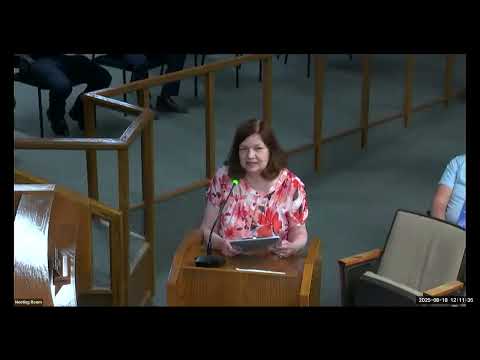
The Public Services Committee on Aug. 18 voted to postpone for two weeks consideration of a proposed ordinance that would revise the municipal code’s vehicle muffler and excessive-noise provisions, after lengthy testimony from residents, representatives of car groups and police.
City Attorney John Brodie told the committee the proposal would remove the city’s current adoption-by-reference of a state statute and instead codify the material elements of that statute in the municipal code, add a nonexhaustive list of factors officers may consider when determining whether a vehicle is creating “unreasonable noise,” and adopt a graduated penalty scheme for repeat violations. Brodie said the proposal borrows language from a Fort Collins ordinance to define conduct and enforcement factors, and that the graduated penalties escalate within a 12-month window so that a third violation could become a jailable offense.
Committee members, law enforcement and members of the public debated several technical and policy issues. Captain James of the Cheyenne Police Department clarified current practice: “it currently says that anything more than 80 decibels at 25 feet is a violation of city code,” but he added that officers rarely have a decibel meter and a 25-foot measurement available during a routine traffic stop; for that reason the added factors give officers discretion to reach probable cause when they observe conduct such as revving engines or squealing tires. The city attorney and police said the proposal would not remove the option to charge conduct as a public nuisance under chapter 8.56, and that officers retain discretion to charge under the traffic code or nuisance provisions depending on the circumstances.
Public commenters included residents who said they hear repeated late-night motorcycle and car noise on residential streets and called for stricter enforcement and stepped-up penalties. Ryan Blue, a Cheyenne resident, warned about leaving enforcement entirely to officer discretion and urged a clear decibel standard: “I think we should set a decibel reading,” he said. Others from local car clubs — Jesse (last name on file), Damien Da Grina (representing Cheyenne Cars and Culture and Cheyenne Cowboys and Cars) and members of the car community — urged clearer thresholds and expressed concern that a broad ordinance with jail as a possible penalty could unfairly penalize car enthusiasts and people with older or louder vehicles. Bob Dickerson, who represents downtown property interests, supported the ordinance as a tool for the police to address racing and disruptive behavior near the parking garage but also noted that some compliant vehicles could measure high on a startup decibel test.
After public testimony and committee discussion — including concerns about officer discretion, decibel thresholds and whether the ordinance covers nonvehicle machinery or fireworks (the attorney said it does not; those remain under chapter 8) — Councilmember White moved to postpone for two weeks to allow further stakeholder talks and drafting adjustments; the committee approved the postponement by voice vote. During the postponement period staff and council members indicated plans to meet with law enforcement and car-community representatives to discuss decibel testing, enforcement procedures and alternative penalties.
Key technical points from the hearing: - Current city code reference: chapter 8.56 (noise control) and an adopted state statute under Title 31 related to excessive vehicle noise are in place; the draft would codify the state statute language into city code and add enforcement factors. - Enforcement baseline: Captain James said the code currently sets an 80-decibel limit measured at 25 feet, but practical enforcement often relies on observed conduct because officers do not carry decibel meters during routine stops. - Penalties: the proposal includes a graduated penalty structure; Brodie said the penalties increase for repeated violations within a 12-month period and that a third violation within 12 months can be jailable.
The postponement gives council and staff two weeks to pursue stakeholder meetings, consider clearer decibel thresholds (several commenters suggested 90 dB at 50 feet), and refine enforcement language to address concerns about discretion and potential unintended consequences such as entrapping lawful vehicle owners.