Get Full Government Meeting Transcripts, Videos, & Alerts Forever!
Get email alerts on the Expungement topic
No spam. Unsubscribe anytime.
Tennessee Court of Criminal Appeals hears dispute over Joshua Lee Shaw’s expungement eligibility
Summary
At an afternoon session in the Tennessee Court of Criminal Appeals, attorneys debated whether Joshua Lee Shaw qualifies for expungement under Tennessee Code Annotated §40-32-101(k) after a probation revocation and later reinstatement; the court took the case under advisement.
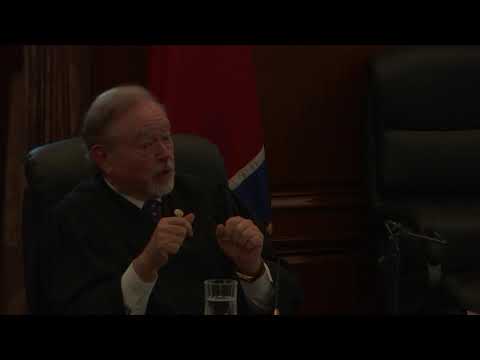
The Tennessee Court of Criminal Appeals heard oral argument in State of Tennessee v. Joshua Lee Shaw during the September afternoon session, with a three-judge panel led by Judge Robert Wedemeyer. Appellant counsel Amber Slaughter urged the court to reverse a trial judge’s denial of Shaw’s petition for expungement, arguing Shaw met the statutory eligibility requirements and had “successfully completed his probation” as shown by a Tennessee Department of Correction letter. The state, represented by Liz Evan, told the panel the statute’s plain language requires meeting “all” conditions of supervised release and that Shaw’s documented probation violations render him ineligible.
The issue before the court was primarily statutory: whether a petitioner who was revoked, then reinstated to probation and later completed the sentence can be considered to have “met all the conditions of supervised or unsupervised release” for purposes of expungement eligibility under Tennessee Code Annotated §40-32-101(k) and related provisions. Counsel debated both statutory interpretation and the trial court’s discretionary weighing of justice and public safety under the statute’s §(g)(5)(B) framework.
Amber Slaughter, attorney for the appellant Joshua Lee Shaw, framed the dispute as a question of statutory construction and of the trial court’s application of the presumption in favor of expungement where statutory prerequisites are met. Slaughter pointed to a letter in the technical record from the Tennessee Department of Correction dated April 9, 2024, stating that Shaw “successfully completed his probation on 08/24/2010,” and argued the trial court erred by treating the statutorily required waiting period and perceived prior leniency as reasons to deny relief.
Liz Evan, counsel for the State, countered that the expungement statute’s requirement to have fulfilled “all the requirements of the sentences imposed by the court,” including meeting “all conditions of supervised or unsupervised release,” must be read literally: a probation violation that was adjudicated means the petitioner did not meet all conditions. Evan emphasized that internal department sanctions without judicial adjudication might raise due-process concerns, but where violations are adjudicated, they bar eligibility under the state’s reading. Evan summarized the state’s position: “all requirements means all,” and argued the trial judge did not abuse his discretion in denying the petition given the documented revocation and reinstatement.
The judges asked detailed questions: they explored whether judicial diversion had been granted (counsel agreed the record contains no support for diversion), whether technical sanctions administered by the Department of Correction without judicial adjudication could constitute a bar, and whether reinstatement to probation after a revocation could be read as the court deeming the petitioner worthy of another chance. The bench also discussed a mandatory revocation scheme referenced by defense counsel, who said a fourth technical violation can trigger mandatory revocation, and how that statutory structure affects the eligibility analysis.
Neither side presented new factual evidence at the argument; counsel relied on the technical record, the TDOC letter, and the trial-court transcript. The panel did not rule from the bench. Judge Wedemeyer thanked counsel and said the court would take the case under advisement and issue an opinion in due course.
The appeal centers on how courts should apply the statutory eligibility rules for expungement when a petitioner has a history of probation violations followed by reinstatement and later completion of the sentence. The panel’s forthcoming opinion will resolve whether such a record satisfies the statutory requirement that a petitioner have met “all the requirements” of supervised release or whether an adjudicated violation remains a bar to expungement.