Get Full Government Meeting Transcripts, Videos, & Alerts Forever!
Get email alerts on the Indoor Air Quality topic
No spam. Unsubscribe anytime.
EnviroMed finds no airborne toxigenic mold in nine Barnstable schools; recommends cleaning, monitoring and HVAC reviews
Summary
A consultant team that tested all nine Barnstable Public Schools found no airborne toxigenic mold and recommended targeted surface cleaning, monthly spot checks, staff training and mechanical (HVAC) engineering assessments tied to the district's capital plan. The district said it will publish the final reports online and notify families.
EnviroMed, the environmental consulting firm engaged by Barnstable Public Schools, reported to the school committee that air testing in all nine district schools found no airborne toxigenic mold and no airborne amplification of allergenic molds, though isolated surface mold was identified and should be cleaned.
The finding matters to parents and staff because the district commissioned the tests after concerns about indoor air quality and prior summertime mold problems; EnviroMed recommended immediate cleaning of identified surface areas, a program of monthly spot checks during humid months, targeted staff training and mechanical (HVAC) engineering assessments tied to the district's capital-improvement planning.
Larry Cannon, CEO and owner of EnviroMed, told the committee the firm completed a forensic-style, districtwide inspection that ran Feb. 26 through March 28, 2025, with three full-time EnviroMed staff, 66 person-days of field work (528 hours), 236 air samples and 102 surface tape-lift samples analyzed by a nationally accredited laboratory.
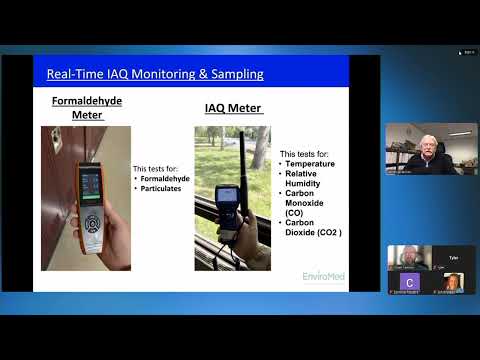
"There was no airborne toxigenic mold in any of the nine schools in any of the samples collected," Cannon said. "There was no airborne mold amplification. There were some surface mold findings, and those areas should be cleaned so they do not become airborne issues." Cannon added that temperature, relative humidity, carbon monoxide, carbon dioxide, volatile organic compounds (VOCs), formaldehyde and particulates were within the norms the team used.
The consultant recommended that custodial staff may clean isolated surface mold under 10 square feet using an EPA-registered disinfectant and that larger or more complex areas be handled by professional remediators with air-scrubbing and post-clearance testing. EnviroMed said the district should require zero detectable mold on post-cleaning surface tests and no airborne amplification on clearance air samples.
Cannon also recommended a monthly spot-check program for each school during humid months, a districtwide training program for staff and custodians on moisture control and response protocols, and scheduling mechanical/HVAC engineering assessments to align with the district's capital improvements. He said a district web page with IAQ resources and reporting guidance is being developed, with an expected launch in July.
School Committee member Jen thanked the consultant and asked whether the final reports would be shared publicly; Dr. Sarah Hearn, superintendent, confirmed the district will post the final reports and this presentation on the district website and will email parents. Committee member Peter pressed about preventing a repeat of a significant mold episode at one building last summer; Cannon said continuous HVAC operation and surveillance during unoccupied periods help prevent rapid bulk mold growth, and the district's engineering team should confirm set points and ventilation.
Cannon said the team found typical afternoon elevations in carbon dioxide in some classrooms and localized elevated VOCs in a few rooms (for example, rooms with perfumes, air fresheners or art materials); he noted the LEED VOC guidance the team referenced is about 500 parts per billion and the CO2 levels observed were well below the 5,000 ppm figure he cited for OSHA guidance. He emphasized that Barnstable's filtration and filter-replacement program likely contributed to the generally good air results.
No formal votes or motions were taken at the meeting on the report. The substantive outcomes recorded were the consultant's recommendations, the district's commitment to publish the final reports and to consider the consultant's monitoring, training and engineering steps as it plans capital work.
EnviroMed provided draft, signed reports for each school that include sampling methods, photos, lab results and recommended actions; the consultant said the draft reports are in final review and will be issued to the district for posting. The district's next steps include posting the reports, implementing recommended cleaning where required, piloting monthly spot checks in the summer months and planning HVAC engineering reviews as part of capital projects.