
Bayonne planning board approves 6‑story, 114‑unit mixed‑use project at former St. Michael’s site with conditions
Get AI-powered insights, summaries, and transcripts
Subscribe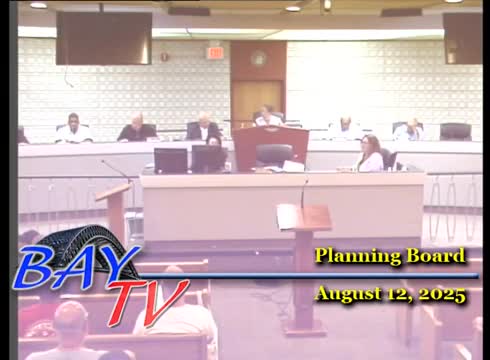
Summary
The Bayonne Planning Board voted to approve a six‑story, 114‑unit building at 15 East 20 Third Street — the former St. Michael’s church site — approving design exceptions and requiring follow‑up work with city engineers on traffic and other technical items amid neighborhood concerns about height, parking and construction impacts.
Planning board members voted to approve preliminary and final major site plan applications for a six‑story, mixed‑use building at 15 East 20 Third Street — the former St. Michael’s church site — after nearly four hours of testimony and public comment. The board approved the application with conditions, including further coordination with city engineers on traffic and technical items.
The project, proposed by 15 East 20 Third Street Urban Renewal LLC, would replace the vacant church and associated buildings with a 70‑foot, six‑story building containing 114 residential units, an on‑site garage with 119 parking spaces and ground‑floor retail. Michael Miceli, the applicant’s attorney, told the board that “the plan before you tonight complies with virtually every regulation in that redevelopment plan.”
Supporters of the project and the applicant’s witnesses said the design follows the redevelopment plan adopted by the city about a year ago and would add housing and ground‑floor retail within walking distance of the 20 Second light‑rail station and Broadway. Architect Bruce Stieve described planned features including a corner entrance oriented toward Broadway, about 1,977 square feet of retail (the agenda listed 2,701 square feet), tenant amenities, a mix of unit sizes and a parking strategy that combines surface parking and a semi‑automated stacker system. Stieve said the building will provide “eyes on the street” along 20 Third Street and that materials and massing recall the neighboring Broadway facades.
But neighbors and other residents pressed the board on a range of impacts. Dozens of area residents asked the board to reconsider the scale and density, citing loss of sunlight, privacy, increased traffic and wear on local infrastructure. Residents who back onto the site from Greg Lane and East 20 Fourth Street said the rear facades and terraces will look directly into their yards and asked for additional setbacks, staging plans and pollution controls during construction.
Traffic and parking were recurring themes. Traffic engineer Elizabeth Dolan said counts showed a modest trip generation and that the nearest intersection did not meet standard criteria to warrant a traffic signal; she estimated roughly 25–30 additional peak‑hour trips at the nearest intersection from the project. The applicant’s civil engineer, Mark Chisvette, said the project proposes an underground detention cistern below the garage ramp to meet the redevelopment‑plan stormwater requirements and that stormwater outflow will be controlled and tied into the city’s combined sewer system. Chisvette also described erosion‑control measures that will be subject to Hudson/Essex/Passaic soil conservation review during construction.
Planning testimony and application materials identify several technical details and conditions: the project proposes 119 on‑site parking spaces (63 self‑park, 56 in a semi‑automated stacker system) and four handicap spaces; the State requirement for electric‑vehicle readiness would require roughly 15% of spaces (about 18 spaces) and the applicant testified that providing EV capacity enables a reduction in the baseline parking requirement. The architect and planner said the roof area includes about 700 square feet of green roof to offset an approximately 2.5% lot‑coverage exceedance; the redevelopment plan language was discussed during testimony and the board’s professionals agreed the applicant’s revisions addressed prior plan comments.
Board members and staff secured several commitments as conditions of approval, including: revised construction‑staging and trash‑management plans before permits; final lighting and rooftop planting details to limit light spillage onto adjacent properties; revised parking details and wheel‑stop/wheel‑clearance corrections; and additional coordination with the city engineer (and board professionals) to review traffic patterns and downstream sewer/storm capacity. Applicant counsel said the team will work with the city on those items.
After deliberation the board voted to approve the application. Chairperson Fiorante and Commissioners Veloz and Booker voted yes; Commissioners Luback, Rhodes and Scheibel abstained. The motion passed, and the board recorded the condition that the applicant continue technical coordination with the city’s engineering office and address the open technical and agency comments before building permits are issued. The vote followed extended public comment, in which residents urged greater setbacks, stronger construction‑time protections and a lower‑density approach.
The approval allows the applicant to proceed to final engineering and building permit applications, subject to resolution of the conditions the board recorded. Building, sewer, stormwater and other permits will be required before construction can begin; the applicant estimated construction would take roughly 20–24 months once permits and financing are in place.
Taken together, board members and applicant witnesses described the project as an infill transit‑oriented development intended to revitalize a long‑vacant institutional site and to provide new housing choices in walking distance of transit and commercial corridors. Neighbors said the scale and timing of multiple new nearby projects raise cumulative concerns about traffic, noise and infrastructure capacity. The board’s conditions require additional engineering checks and coordination before the project advances into the permit stage.