
Andre 3000 urges Berklee graduates to 'look ahead' and stay true to feeling
Get AI-powered insights, summaries, and transcripts
Subscribe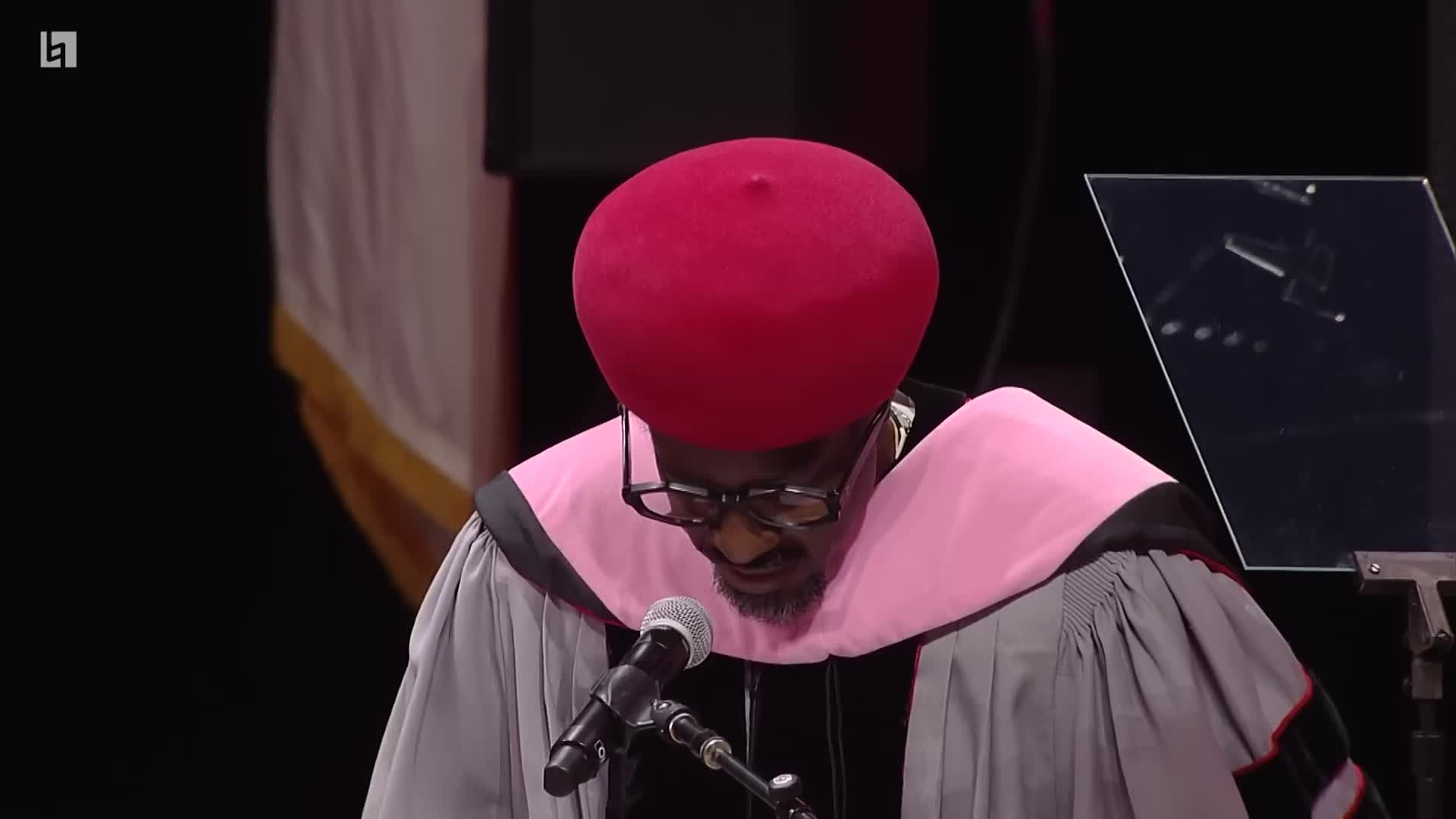
Summary
Rapper Andre 3000, speaking at a Berklee commencement ceremony, told graduates to preserve the original feeling that drew them to music, rely on attentive listening developed through sampling culture, and resist critics while staying creatively bold.
Andre 3000, the rapper and musician, told graduates at a commencement ceremony at the Berklee School of Music that they should "look directly at the future" and keep the original feeling that drew them to music.
Why it matters: 3000 framed his advice around two themes that recur in contemporary music-making—listening as craft and artistic integrity—and tied them to his own experience growing up with drum machines and sampling rather than formal school-based training.
3000 said he was "super excited" when invited to give the commencement address because he wanted "to look directly at the future" in the graduates. He described a formative practice of patient listening driven by sample-based production: "it forced us into a practice of patiently listening, listening to records, listening for special moments in the records, sounds, inspiration." He cited early equipment by name when describing that era: an Akai MPC3000 and an E-mu SP-1200.
Drawing on memories of church music and local radio in Atlanta, he said those early experiences taught him the emotional power of sound. "As a child, I watched how deeply people were moved by these sounds, and that clearly felt like something. I remembered that feeling," he said, describing a one-room church on Cascade Road in Atlanta, Georgia.
3000 told students that technical mastery should serve feeling: "Overall, the the notes, the scales, the changes, the chords, what's most important is the feeling. The people listening, they don't know any of that. You know? So it's really important for you to transfer and relay your feeling." He advised graduates not to be derailed by critics: "Once it's recorded, once you've done what you have to do, that's the work. Everything else is chatter, and it and it does not matter."
He also urged persistence and openness to surprises: "Always stay excited about something. That'll keep you going," he said, and advised students to keep "their antennas up" to capture new ideas. 3000 recounted starting OutKast with a high-school partner and gradually moving into production on later albums; he said each release prompted concern from a cousin who would tell him, "man, I'm scared for you Dre," because the work was increasingly radical—advice he said graduates should not let stop them.
3000 closed his remarks by differentiating entertainers from artists, urging those who see themselves as artists to remain true to their instincts rather than treating art as a request-driven service: "If you're an entertainer and that's your job to entertain people, yes, you do that. But if you're an artist, your job is to stay true into what you feel and stay true into your instincts."