Get Full Government Meeting Transcripts, Videos, & Alerts Forever!
Get email alerts on the Ordinance Procedure topic
No spam. Unsubscribe anytime.
Committee discusses allowing debate and amendments at first reading; staff to vet code language and state vote thresholds
Summary
Staff presented revised wording for local rules on ordinance readings that preserves two readings as the norm but clarifies that an ordinance may be debated and amended at first reading; staff noted that if an ordinance is introduced and voted on the same night, state law requires a two‑thirds vote of all elected members for adoption.
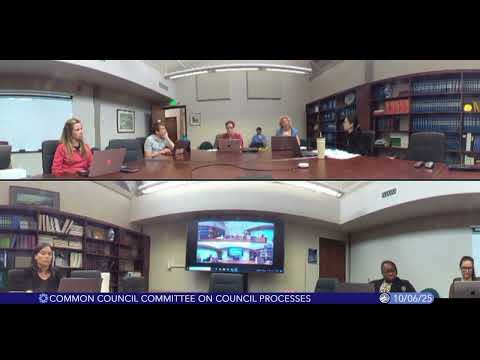
Committee members and staff discussed a proposed revision to the council rules that would clarify how ordinances and resolutions are read and whether items may be debated or adopted at first reading.
Staff proposed a reworded section that would state ordinances generally receive two readings but may be debated and amended at first reading; if an ordinance is introduced and voted on the same meeting, staff noted that Indiana law requires a two‑thirds vote of all elected members for adoption. Committee members debated whether the ordinary practice of reading “by title and synopsis only” under unanimous consent remains the default or whether the code should explicitly lead with the state statute requirement and then explain local practice.
Members said unanimous consent has historically been used to avoid reading the ordinance in full and to speed proceedings; some members expressed concern that rewording could create confusion about whether an individual member could block the introduction. Staff advised that the Indiana Code does not use the terms “first reading” and “second reading” and instead focuses on dates of introduction; local code uses the reading terminology. Staff said they would have legal staff review the committee’s draft language and compare it to state code to ensure the local ordinance language aligns with statutory requirements and common practice.
Next steps: staff will circulate their revised wording to legal counsel for review and bring a vetted draft back to the committee; the committee did not take formal action at this meeting.