Get Full Government Meeting Transcripts, Videos, & Alerts Forever!
Get email alerts on the Residency Requirements topic
No spam. Unsubscribe anytime.
Committee debates allowing Monroe County residents on city boards; staff recommends case‑by‑case changes and code cleanup
Summary
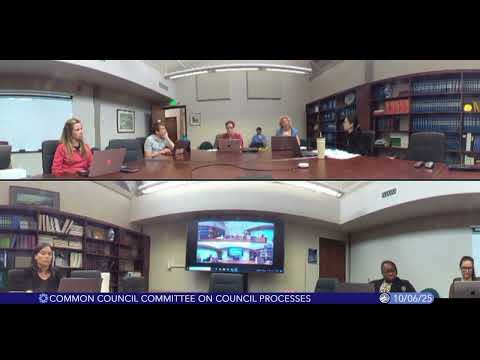
City staff told the committee they had reviewed roughly 40 boards and commissions and recommended addressing residency rules on a commission‑by‑commission basis rather than imposing a uniform change.
City staff presented a comprehensive review of residency requirements for appointments to Bloomington’s boards and commissions and recommended handling changes on a case‑by‑case basis rather than adopting a single uniform rule.
Staff said they examined roughly 40 boards and commissions and found three primary situations: (1) some boards already include county representation or county appointees, (2) some boards are required by state law to have city residents, and (3) some boards are closely tied to city finances, which can justify city‑resident limitations. Staff recommended identifying specific commissions where county residents might be allowed — for example by converting a vacancy into an advisory seat or by authorizing one county appointment — rather than changing residency requirements across the board.
Committee members debated the Arts Commission example that prompted the review. Some members said affordability limits Bloomington’s resident applicant pool and that county residents might add useful perspectives; others emphasized that boards distributing city funds may reasonably be limited to city residents. Mayor Julius Mitchell said, “I wouldn't say it's a blanket no on any county appointments,” and added he did not believe adding a single county appointee to a particular commission would be legally barred. The mayor also said he had interviewed many qualified applicants for recent vacancies.
Staff pointed out a code‑location problem: the residency requirement language currently appears under the municipal code’s executive‑branch general provisions rather than under the boards and commissions chapter, which makes it hard for applicants to find. Staff suggested moving residency and removal language into Title 2 (boards and commissions) to improve clarity. The committee noted that the municipal code already requires a member who no longer resides in the city to resign; staff read the relevant provision aloud, saying the code provides that “in the event a member . . . no longer resides in the city, the member shall resign immediately and notify the appropriate appointing official.”
Committee members discussed advisory seats as a compromise for bodies that wish to hear county input without granting voting rights. Staff said some bodies (for example the Historic Preservation Commission and the Commission on Hispanic and Latino Affairs) already use advisory seats and that onboarding and appointment letters make advisory status explicit during the interview and appointment process. Staff recommended outreach to the small subset of commissions (staff estimated three to four) that could be candidates for county advisory or appointment changes, and to prepare a proposal listing those commissions for the committee’s next meeting.
Next steps: staff will finalize a spreadsheet identifying candidate commissions, propose code cleanup to move residency/remove language into the boards/commissions chapter of the Bloomington Municipal Code, and reach out to the identified boards for feedback. No formal votes or ordinance adoptions occurred during this meeting.