
Socorro council adopts resolution limiting city use of eminent domain for occupied homes and private projects
Get AI-powered insights, summaries, and transcripts
Subscribe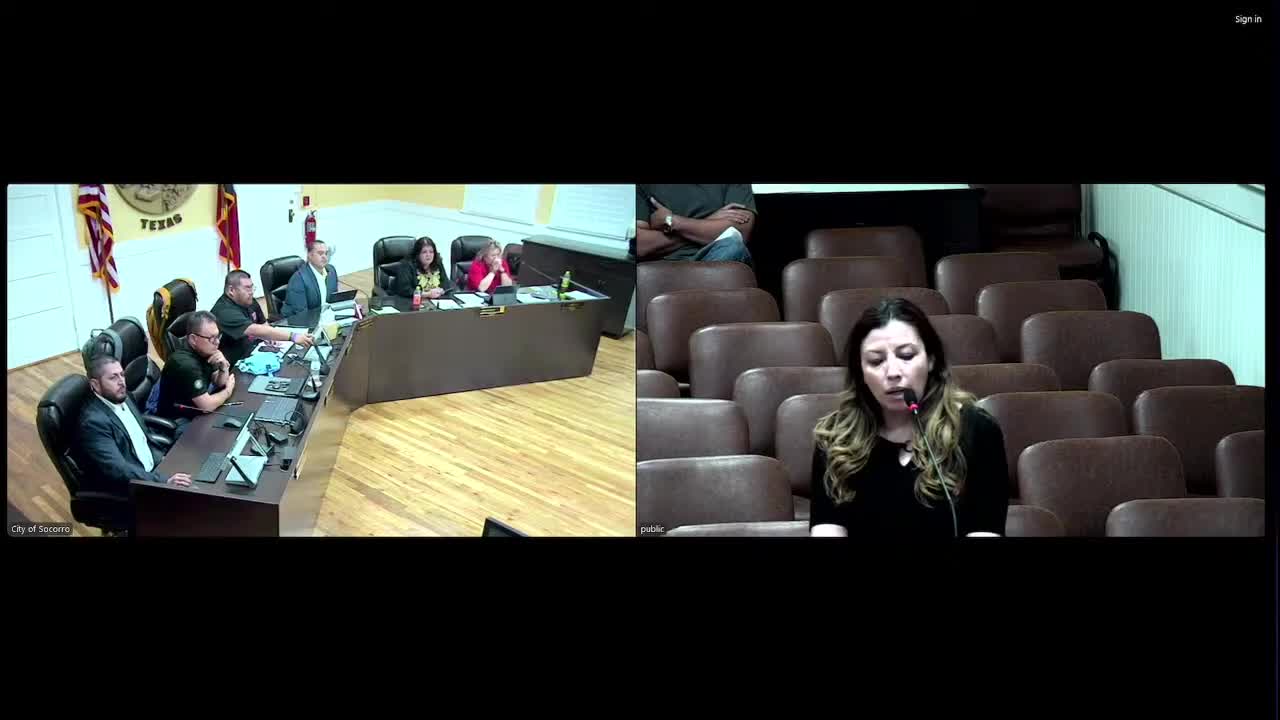
Summary
The council passed a resolution stating it will not authorize eminent domain to demolish occupied homes or to acquire residential property for arterial highways or solely to benefit private economic development; the resolution also calls for exploring charter amendments and state legislation to protect property rights.
The Socorro City Council on Aug. 7 adopted a resolution declaring the council’s intention to limit the city’s use of eminent domain for certain purposes, including the demolition of occupied homes and acquisition of residential property for arterial highways or solely to benefit private commercial development.
The resolution, drafted by a council member and discussed in open session, states that the council will not authorize eminent domain for demolishing occupied residences nor for acquiring residentially zoned property solely to permit private economic development that has no other public purpose. The measure also directs the council to pursue potential amendments to the city’s home-rule charter and to coordinate with state representatives on legislation “to create a level playing field for all Socorro property owners.”
During council discussion members debated whether the resolution could limit future flexibility. Some councilors noted ongoing land-acquisition efforts — including the Nuevo Hueco Tanks connection and Sparks Arroyo projects — and asked whether the resolution would impede those efforts. Staff and councilors clarified that negotiated acquisitions remain available and that eminent domain would be the last resort; the resolution is intended to constrain the city from using condemnation to remove occupied homes for arterial projects or for private development without public purpose.
A public commenter, Azule Marina, asked whether agricultural and farmland protections could be added to the resolution; the mayor and staff offered to meet with the speaker to discuss language and implementation.
Why it matters: The resolution signals the council’s intent to prioritize negotiated acquisitions and to avoid using condemnation to displace households for road construction or private-development outcomes. Council supporters described the resolution as an additional commitment to property-rights protections; other members raised questions about whether an aspirational city policy could unintentionally limit future municipal actions without additional safeguards.
Outcome: The council approved the resolution by voice vote; the full text was read into the record following adoption.