
Cartwright board holds public hearing on 2024-25 bond and override spending; $5.1M remains
Get AI-powered insights, summaries, and transcripts
Subscribe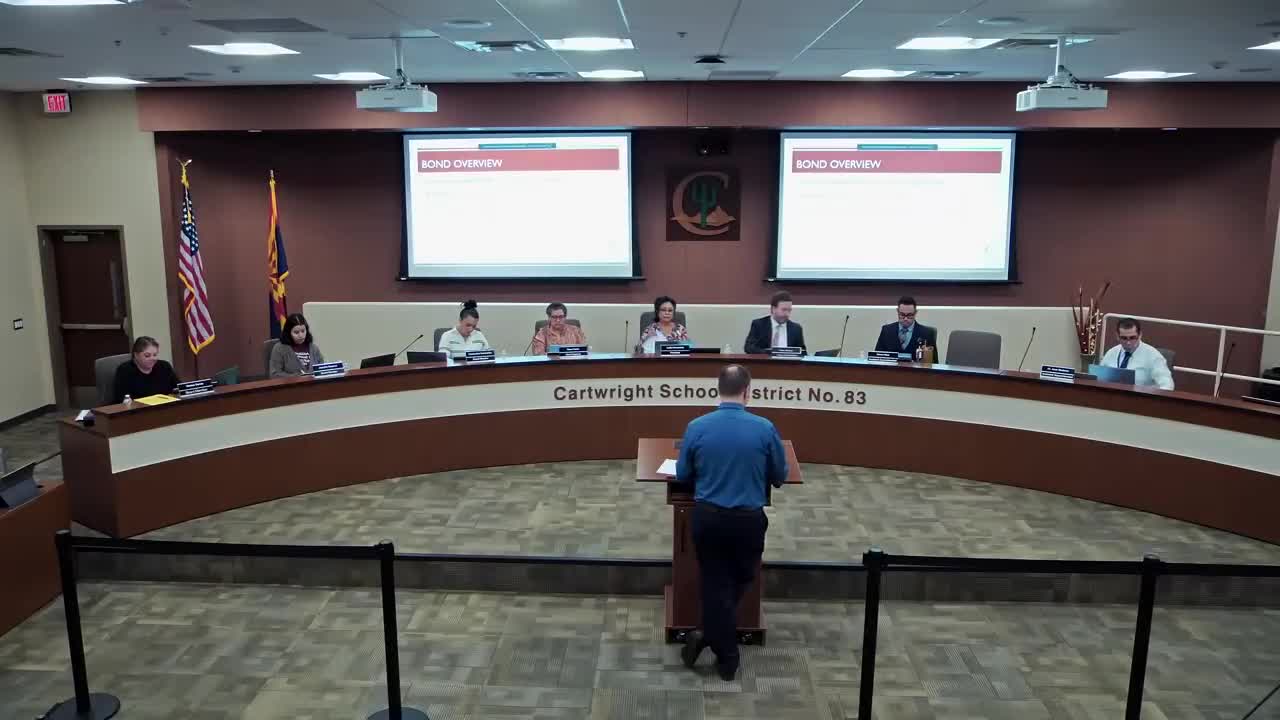
Summary
At a required Oct. 1 public hearing, district staff reported roughly $14.7 million in bond expenditures in FY25, leaving about $5.1 million unspent from a $60 million authorization; override revenue for FY25 was about $13.7 million, funding full-day kindergarten and class-size staffing.
Cartwright Elementary District officials presented the district's annual bond and override report at a public hearing Oct. 1, telling the governing board and public that the district spent about $14.7 million of bond proceeds during fiscal year 2024'1 and that roughly $5.1 million remains of the $60 million bond authorization approved by voters in November 2020.
District finance staff said the voters authorized $60 million in November 2020 and the district sold $15 million in bonds in each of 2021, 2022, 2023 and 2024. The FY25 bond expenditures the board reviewed included $8 million for cafeteria remodels, roughly $4.3 million for the new event center, about $1.27 million for long-jump pits, and roughly $971,006.20 charged in FY25 for privacy screening and fencing (the presenter noted that the total cost for screening/fencing across multiple years was closer to $8 million, and the FY25 line reflects the FY25 cash expenditures). Staff said encumbrances remaining include roughly $213,000 to finish the event center work (about $100,000 of that retainage and about $113,000 for audio-visual installation) and small carryover amounts for completed work pending final invoices.
The presentation also covered the voter-approved maintenance-and-operations (M&O) override. Voters approved a 15% override in November 2022; staff reported FY25 override revenue of about $13.7 million. The district used roughly $2 million of override funds to provide full-day kindergarten and about $387,000 for instructional supplies; the remainder supported class-size standards. Staff said approximately 140 teachers (about 20% of teaching positions) are funded by override dollars and that, if override revenue were lost, class sizes could increase by about 20 percent (staff gave a possible example range from kindergarten classes of about 30 students to eighth-grade classes of about 40 students if those positions were cut).
Supervising staff told the board that the remaining $5.1 million in bond funds require strategic planning and stakeholder engagement before further spending, noting the district must align any remaining capital spending to instructional priorities and cannot expect to issue a new bond in the near term. The presentation referenced statutory requirements (ARS 15-491) requiring an annual public presentation to report bond and override expenditures between Sept. 1 and Oct. 31 when bond/override funds are spent.
Board members and the public raised questions about project selection, timing and whether some projects were approved under prior administrations. Board members noted some projects began or were contracted prior to the current administration and said that, because many projects were started across fiscal years, carryover billing led to FY25 expenditures that reflected work initiated earlier. One board member asked for improved adherence to board policies and procurement procedures.
The public hearing closed with no formal board action on new spending; staff said any future use of the remaining bond balance would come back to the board after further planning and stakeholder engagement.