Get Full Government Meeting Transcripts, Videos, & Alerts Forever!
Get email alerts on the Land Acquisition Process topic
No spam. Unsubscribe anytime.
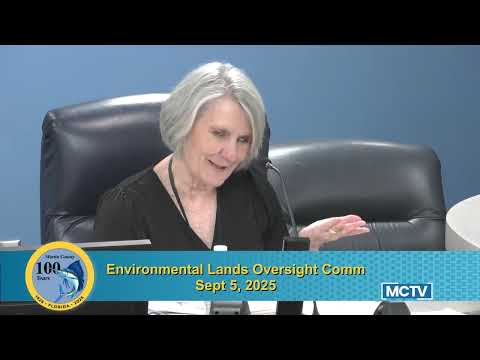
Committee clarifies 1–100 scoring, weighs adjacency and outside management in rankings
Summary
Martin County committee agreed the "management considerations" category should be scored on a 1–100 scale and that adjacency to larger conserved lands or existing managers (state districts, federal agencies, private land trusts) should raise a score; members also agreed to re-rank prior evaluations with the clarified guidance.
Martin County staff and committee members clarified how to score the committee's "management considerations" category and said they will rerank prior property evaluations using the clarified approach.
The guidance centers on two points: the committee will score management considerations on a 1–100 scale, and parcels adjacent to larger, actively managed conservation lands or those likely to be managed by partners should receive higher scores. Mike (staff member) said, "We developed this manual to be your guide... the item number 5, management considerations, was strictly based more on the habitats and the ease of restoring a management." He explained smaller, isolated or highly degraded parcels should score lower because they are harder and costlier to restore and maintain.
Committee members pressed the practical implications. Beth (committee member) asked whether proximity to an already-maintained property makes management easier; Mike answered yes and said such adjacency should raise a property's score toward the high end of the 1–100 scale. Dan (committee member) and others said they also factored in whether a state or federal agency, water management district or private partner would manage a parcel — which the committee treated as a positive because it reduces Martin County taxpayer expense. As Dan summarized, "If it's adjacent or near a larger property that's being currently managed, then it would be a higher ranking."
Committee members also discussed edge effects, invasive species challenges, and smoke-sensitive neighbors that can complicate prescribed fire and other management tools; Mike recommended using professional judgment when converting those considerations into the numeric score. The committee agreed that properties already contiguous to public conservation lands or likely to be taken over by partners should be rated toward 100, while tiny or heavily invaded lots should receive scores closer to 1.
As a procedural direction, the committee told staff they would return to rerank properties previously evaluated under the older or inconsistent interpretations. Mike said the manual can be updated later to reflect these clarifications. The committee set a plan to submit their updated rankings for tabulation once members rerank earlier parcels.
Ending: The committee's clarified approach — 1–100 scoring plus explicit credit for adjacency and partner-managed lands — will be applied when members finish re-ranking earlier nominations and in future property assessments.