Bayonne planning board approves redevelopment plan for 626–628 Avenue A, limits project to 20 units
Loading...
Summary
The City of Bayonne Planning Board at its September meeting approved a redevelopment plan for property at 626–628 Avenue A (Block 405, Lot 31), clearing the way for a multifamily residential project limited to 20 dwelling units.
The City of Bayonne Planning Board at its September meeting approved a redevelopment plan for property at 626–628 Avenue A (Block 405, Lot 31), clearing the way for a multifamily residential project limited to 20 dwelling units.
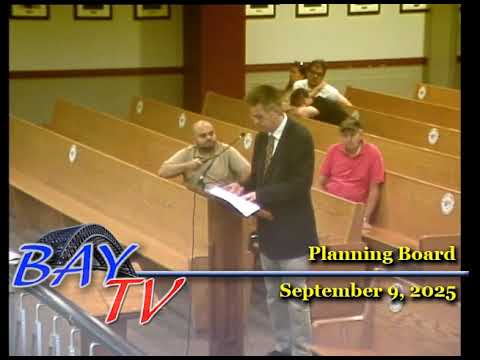
The plan, presented by Ronald Reinertsen of CME Associates, designates the site for multifamily residential use consisting only of one- and two‑bedroom apartments and sets a maximum of 20 dwelling units for the parcel. Reinertsen told the board, "20 dwelling units is maximum." He also said the plan is a non-condemnation redevelopment plan and that a relocation plan pursuant to section 7 of the Local Redevelopment and Housing Law will not be required for this site.
The redevelopment document revises local land‑development controls for the parcel: it states that the standards in the redevelopment plan "shall supersede the city's existing regulations, including the zoning regulations of the underlying zone," and then lists bulk, parking and design standards tailored to the lot. Key numerical standards cited in the presentation include a minimum lot area of 6,500 square feet and a minimum lot frontage on Avenue E of 65 feet; the plan limits impervious/open‑space calculations and proposes an open‑space minimum of 15 percent, which the presenter said may include passive recreation, rooftop terraces and "recreation facility" uses.
Reinertsen explained the plan's parking and design approach: off‑street parking may be surface or structured and the plan includes specific vehicle stall dimensions, curb‑cut rules, building articulation, streetscape elements and requirements for street trees. On setbacks, the presenter said the plan treats rear and side setbacks on a parcel‑by‑parcel basis, noting examples of "0 feet from the public right of way," 5 feet to an adjacent lot and 10 feet to another adjacent lot; in discussion the board also noted a 10‑foot setback toward the rail and a 5‑foot setback to the neighbor to the south.
A board professional, identified in the record as Miss Mack, urged a few additional edits before the plan goes to council, including language on traffic‑signal preemption and clarifications to maximum building height. Miss Mack observed, "This is the city's plan," and said she preferred including language that would address rooftop height so that the finished building would not exceed the modeled height threshold. Reinertsen said he would prepare a redline showing the proposed edits so council and applicants can clearly see the changes.
After the presentation and professional comments, the board voted to adopt the redevelopment plan. The roll call recorded Chairperson Fiamante, Vice Chair Villalado, Commissioner Booker, Commissioner Lubac, Commissioner Locke and Commissioner Scheibel as voting in the affirmative; the redevelopment plan was approved by the planning board.
The board's adoption means the redevelopment plan will be forwarded as the planning board's action on the designated site; the presenter indicated he would produce a marked (redline) version of the plan reflecting the small clarifications requested by the board and the board professional for council review.
What happens next: the plan the board adopted will accompany the municipal process for redevelopment (the board noted the document's statutory citations and consistency statements), and staff and the presenter said they would provide a redlined plan and summary of edits for council and future applicants.