
Quasi‑judicial hearing on additional dwelling allowance draws experts and opposition; ownership, traffic and access remain contested
Get AI-powered insights, summaries, and transcripts
Subscribe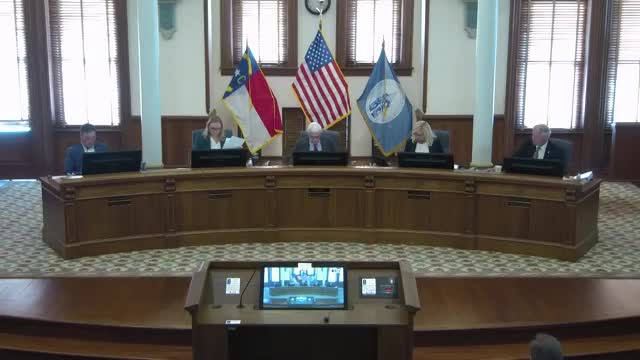
Summary
New Hanover County held a quasi‑judicial hearing Oct. 9 on a special use permit request to allow additional dwelling density north of the Taryn Woods subdivision; five applicant experts testified and neighbors raised objections about application completeness, ownership signatures and traffic and flooding risks.
The New Hanover County Board of Commissioners held a quasi‑judicial hearing Oct. 9 on a special use permit (SUP) request by Hoosier Daddy LLC — doing business as Who's Your Daddy LLC — to allow an additional dwelling allowance and higher density on property north of the Taryn Woods subdivision along the Carolina Beach Road corridor.
Staff and the applicant presented testimony from five expert witnesses addressing the UDO’s four SUP criteria (public health and safety; compliance with UDO conditions/specifications; injury to adjoining property values; and harmony with the county comprehensive land use plan). Experts for the applicant included Howard Resnick (civil engineer), Chase Smith (traffic engineer, RFK Engineers), David Seister (wetlands/wetland biologist), C. J. Morgan (real estate appraiser), and Ashley Barefoot (planning and land use consultant). The applicant’s counsel and project team said the plan proposes 291 dwelling units on approximately 43.1 acres at a density of 6.75 dwelling units per acre, provides 35.06% open space, meets the UDO impervious surface limit of 40%, and includes a proposed collector road with a right‑in/right‑out connection to Carolina Beach Road and a restricted stub to Rosa Parks Lane.
Howard Resnick testified the site design meets UDO standards for emergency access, parking (255 spaces, 23 more than required), setbacks and stormwater designed to county standards; Chase Smith said the traffic analysis shows a reduction in trip generation compared with a prior application and that the Wilmington MPO provided an updated letter validating the earlier traffic impact analysis for the current plan. Ashley Barefoot testified the proposal is within 250 feet of an urban mixed‑use place type and that the project provides transitional density between the commercial corridor and lower‑density single‑family neighborhoods.
Opponents, including Michael McCully (representing nearby residents and the Taryn Woods Homeowners Association), challenged the application’s completeness and accuracy, arguing the owner/applicant signatures and operating company structure were inconsistent across prior filings and that the July application relied on agency authorizations and post‑death ratifications related to a deceased member, Jack Carlisle. McCully argued the application was “incomplete and inaccurate” and raised concerns about premature road deterioration in adjacent neighborhoods and increased flooding and impervious surface.
County staff and the county attorney explained the SUP process and said staff had deemed the application complete; staff also noted that the application was filed before board changes that later removed SUP availability for additional dwelling allowances, so the earlier process applied. During board discussion commissioners asked technical questions about stormwater design standards (the county standard is a 25‑year storm; applicants may design for higher levels), stormwater review status, and whether driveway permits for the proposed Carolina Beach Road access had been issued (NCDOT driveway permit status was not confirmed in the hearing record).
The record shows a motion to deny was made citing traffic, school overcrowding concerns and incompleteness of the application; the motion was seconded and the board voted verbally. The transcript records the motion and verbal “aye”/“nay” responses but does not include a complete roll‑call tally or a final certified outcome in the provided excerpt. The board recessed shortly thereafter.
Because the hearing was quasi‑judicial, speakers and exhibits were sworn and the record included affidavits from each of the applicant’s experts and supporting materials submitted in binders. The applicant asked the board to admit staff’s report and application materials into evidence; the applicant’s counsel said, “We have provided a binder of this evidence to one of the parties that we anticipate speaking this afternoon so that they could review these materials as well.”
Key implementation dependencies noted during the hearing include: NCDOT driveway permitting for the proposed Carolina Beach Road connection; Wilmington MPO concurrence and technical requirements identified in the traffic impact analysis; and final stormwater and CFPUA water/sewer approvals. Opponents said they would seek further review of signature authenticity and ownership documentation; one opponent referenced a forensic document examiner report alleging signature irregularities, though that expert was not presented live during the hearing.
The hearing included extended public comment and legal argument about whether the application should have been considered complete; the board heard legal counsel's analysis that staff had found the application complete and that the evidentiary record submitted by the applicant met the SUP criteria unless competent rebuttal evidence was provided by opponents. The transcript does not record a final, certified disposition with roll‑call tally in the excerpt provided.