
Pike County officials debate surrender fees as animal shelter reaches capacity; proposed fee fails
Get AI-powered insights, summaries, and transcripts
Subscribe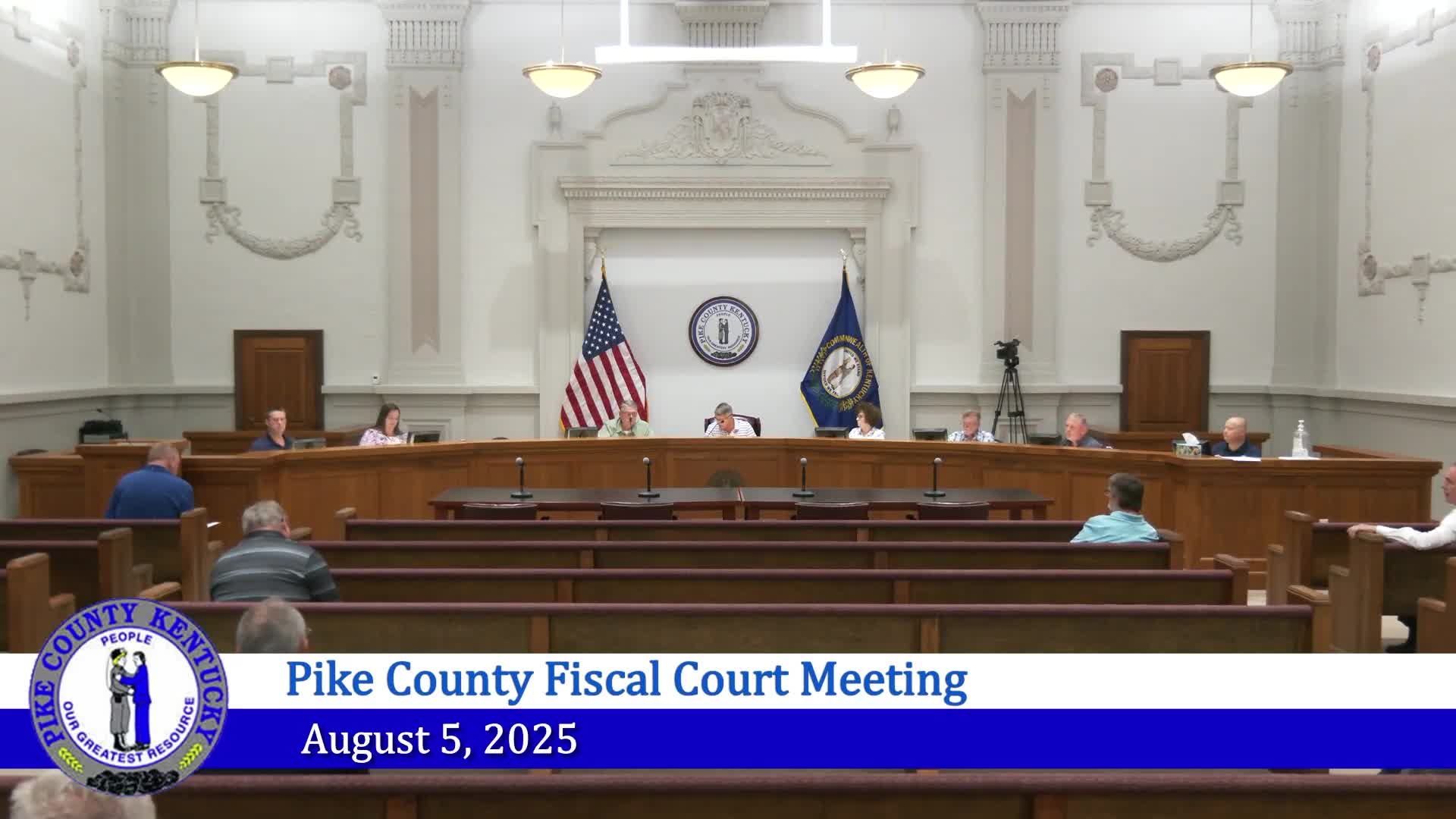
Summary
Pike County Fiscal Court heard extended discussion about an overcrowded animal shelter and a proposed owner-surrender fee intended to offset costs. Commissioners debated a $300 fee for unaltered animals and $150 for altered ones; the motion failed for lack of a majority.
Pike County Fiscal Court members discussed a surge in animals at the county shelter and considered implementing owner-surrender fees after officials said the facility had reached maximum capacity.
County leadership told the court the shelter held 83 animals, including 58 dogs, and that local rescue partners are largely unable to accept transfers. Judge (presiding), who led the discussion, said the county has so far operated the shelter as a no-kill facility and that euthanasia would be considered only for animals that are sick or deemed vicious. “We have a total of 83. 58 are dogs out of the 83,” Billy Tussey said when asked about current shelter counts.
The court explored charging residents a surrender fee to cover veterinary and housing costs. Billy Tussey and other commissioners discussed a scale such as $250–$300 for unspayed/unneutered dogs and $100–$150 for altered animals; one commissioner proposed $300 for unaltered animals and $150 for altered animals. A commissioner noted, “We’re spending over 430,000 a year on the animal shelter,” to underline the county’s ongoing expenses.
Supporters of a fee argued it would reduce voluntary surrenders and help cover spay/neuter and medical costs; opponents worried fees would lead to more animals being abandoned illegally. The court debated operational options including temporary facility expansion, partnering with Petco for adoption events, and seeking assistance from regional humane organizations. County staff said many regional rescues are full and that the county has been unable to transfer animals as in past years.
A motion to implement a surrender-fee schedule (proposed $300 for unspayed/unneutered animals; $150 for altered animals) was made and seconded. After a roll-call, the presiding judge announced the motion failed for lack of a majority. The court did not adopt a fee, and members instructed staff to continue outreach to rescues and explore temporary housing options.
Court members emphasized the public-safety and budget consequences while asking staff to return with follow-up options. The court also noted the possibility of seeking publicity to raise adoption awareness and to identify funding, but no further formal actions were taken at the meeting.
The issue arose during the regular business portion of the meeting, not during public comment; the court discussed it at length before and after a briefly scheduled executive session.