Get Full Government Meeting Transcripts, Videos, & Alerts Forever!
Get email alerts on the Active Transportation topic
No spam. Unsubscribe anytime.
Urbana bicycle-pedestrian advisory commission urges Vision Zero steps and lower speeds on East Main
Summary
The Bicycle and Pedestrian Advisory Commission presented a two-year annual report to Urbana City Council, pushing for Vision Zero policies, a speed-management plan and expanded micro‑mobility and education efforts — and called for an immediate speed reduction on East Main Street.
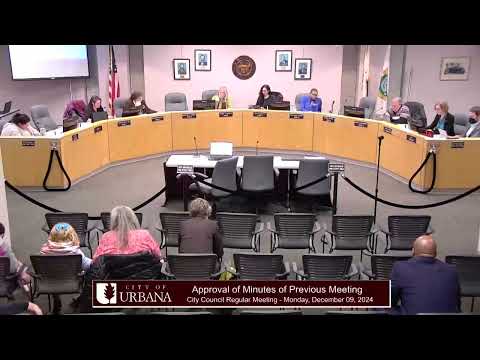
The Bicycle and Pedestrian Advisory Commission presented its annual report to the Urbana City Council on Dec. 9, urging the city to adopt Vision Zero measures, step up speed-management efforts and expand bicycle and pedestrian education.
Audrey Ishii, acting chair and vice chair of the Bicycle and Pedestrian Advisory Commission, told the council the report covers work since 2023 and that the commission is “a relatively large commission with 11 members.” Ishii said the group has moved from mostly reviewing projects to producing formal recommendations and resolutions for council consideration.
The commission emphasized equity and engagement in prioritizing projects and singled out speed management as a near-term safety priority. “This is why BPAC has called on the city to immediately reduce the speed on East Main Street,” Ishii said, arguing that speed increases severity of crashes and disproportionately harms people who walk and bike.
Why it matters: BPAC framed its recommendations under the Vision Zero approach supported by USDOT grant programs and cited rising national traffic deaths after the pandemic and a sharp increase in Urbana pedestrian fatalities when compared to earlier periods. The commission noted Urbana’s comparatively high transit use and household lack of vehicle access, saying those factors heighten the local impact of unsafe streets.
Details and recommendations: BPAC highlighted several items it will forward to council, including use of Safe Streets and Roads for All funding, adoption of a speed-management plan and traffic-calming demonstrations. The commission also asked the city to coordinate community responses to “micromobility” vehicles (electric bikes, scooters and similar devices) across jurisdictions so rules do not change at municipal boundaries.
Ishii noted education and outreach as part of the approach: BPAC would like expanded bike education in schools and coordinated community training programs for new micromobility users. She told council members the commission hopes to work with the university and the fire department on battery-safety and certification questions related to electric devices.
Council response: Several council members asked for follow-up information. One member noted the city’s mix of street ownership — city, county, university and state — and asked staff to identify which agencies the city must coordinate with for targeted speed reductions.
The commission’s packet includes project reviews, prior resolutions on parking and bike lanes and East University Avenue comments. BPAC said it will submit formal recommendations for council consideration and offered to provide more detailed design and cost estimates for traffic-calming demonstrations.
Provenance: Presentation and Q&A with Audrey Ishii and BPAC members at the Dec. 9 Urbana City Council meeting. The commission provided slides and a written packet to council; the presentation and related council discussion are on the public record.