Get Full Government Meeting Transcripts, Videos, & Alerts Forever!
Get email alerts on the Noise Enforcement topic
No spam. Unsubscribe anytime.
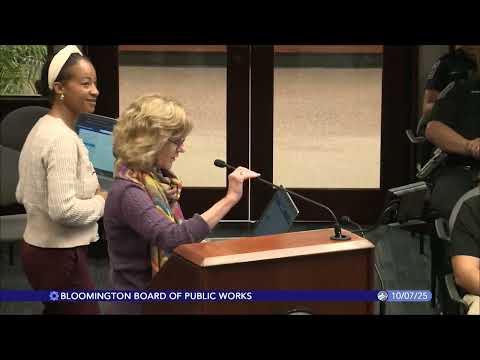
Board of Public Works denies noise appeal for 710 East First Street
Summary
The Board of Public Works on Oct. 7 denied an appeal of a noise citation issued for a private event at 710 East First Street, finding occupants allowed unreasonable noise on the property under Bloomington code §14-09-030.
The Board of Public Works denied an appeal of a noise citation for 710 East First Street on Oct. 7, finding the occupants allowed unreasonable noise on property they occupied.
The finding stems from a city police officer's testimony that she “heard loud amplified noise coming from the residence” when she responded to multiple calls about the address, and from appellants’ own acknowledgement that they hosted a private event that drew a crowd. City Legal directed the board to Bloomington Municipal Code §14-09-030, which defines “unreasonable noise” and makes it unlawful to cause or allow such noise on property a person occupies or controls.
Officer High Tank of the Bloomington Police Department testified that the department received several complaints in short succession and that, when she arrived, she could hear amplified music coming from inside the unit. Appellant Carter Clay Smith, who identified himself as a resident at 710 East First Street, said he organized a members-only event for a group he described as “Black in Business” and that uninvited people surged to the property within about 10 minutes.
Smith said the doors were locked and the hosts attempted to remove uninvited guests, and he blamed a vehicle parked outside that was “blasting music” for much of the disturbance. He said neighbors told him the party noise had not been excessive earlier in the evening. City Legal counsel Anadina Kasemanian and staff attorney Margie Rice told the board the relevant code holds the person who occupies or controls property responsible for allowing unreasonable noise; Rice said the officer’s firsthand hearing of noise and the occupants’ admission of an event supported a finding against the appellants.
A board member moved to deny the appeal “finding that the appellants did allow for unreasonable noise to be caused or made in or on their real estate.” After a second, the board called the roll and recorded aye votes from Roach and Caron; the motion passed.
The board noted that if the appellants wish to challenge the decision further, the next recourse is to appeal to circuit court.