
Preliminary forum held for proposed 291‑unit additional dwelling allowance north of Taryn Woods; traffic, HOA and application completeness disputed
Get AI-powered insights, summaries, and transcripts
Subscribe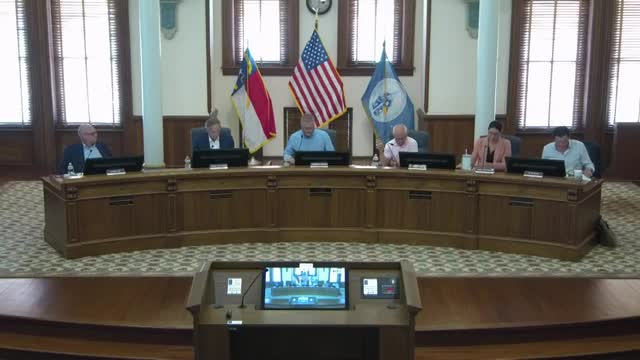
Summary
The New Hanover County Planning Board on Sept. 4 held a preliminary forum for a special use permit that would allow up to 291 dwelling units north of the Terrain/Taryn Woods subdivision; the board made no recommendation and the matter moves to a quasi‑judicial hearing before the county commissioners.
The New Hanover County Planning Board on Sept. 4 held a preliminary forum — an advisory, non‑decisional hearing — on a special use permit application that would grant an additional dwelling allowance for property north of the Terrain/Taryn Woods subdivision. Staff said the application proposes a maximum of 291 dwelling units at 6.75 dwelling units per acre; board members did not make a recommendation and the matter will proceed to a quasi‑judicial hearing before the Board of Commissioners.
Planning staffer Robert Farrell opened the staff presentation and reminded the board that preliminary forums are informational: neither staff nor the planning board will make a formal recommendation tonight, and the Board of Commissioners must later hold a quasi‑judicial hearing that requires sworn testimony and four statutory findings, including that the proposed use will not materially endanger public health or safety and will be in harmony with the area.
The applicant presented a revised plan that the attorney described as “materially different” from a denied 2023 application. The applicant’s attorney, identified in the record as Corey (attorney for the applicant), said the new proposal reduces the previous request from 444 units (10.2 du/acre) to a maximum of 291 units at 6.75 du/acre and would set aside a 35% minimum open space required by the UDO for an additional dwelling allowance. Corey told the board the applicant intends to present expert testimony at the commissioners’ hearing from civil and traffic engineers and an appraiser to address ordinance criteria, stormwater, and property‑value impacts. Corey said the TIA approved previously allowed up to 3,025 daily trips and that the current proposal would generate “nearly 1,000 fewer per day” than that approval.
Staff noted the application must be reviewed under the UDO rules that applied when the application was submitted, because the developer filed before the county changed procedures for additional dwelling allowances. Farrell described the site and concept plan to the board: an approximately 13.1‑acre area (shown on the plan as one segment) with capacity for about 110 units and an adjacent roughly 30‑acre portion that includes additional buildable acreage; the concept plan would allow a range of housing types in some parts (including multifamily options in the blue‑outlined area) and attached housing types in the green‑outlined transition area, with a condition restricting access to Rosa Parks Lane and proposing an additional access to Carolina Beach Road.
Traffic and access were central concerns during the public forum. The applicant and WMPO staff, represented in the meeting record by Caitlin Serza, said the previously approved traffic impact analysis (TIA) had been reviewed and confirmed as still valid for this application by WMPO and by NCDOT staff during resubmittal. Serza described how the WMPO scopes TIAs to include completed adjacent developments and an agreed background growth rate and said reviewers aim to be conservative when scoping studies.
Opponents, including Samantha Bunge (homeowner and chairperson of the HOA bylaws and covenants committee), argued the application is procedurally incomplete, cited inconsistencies in signature pages and owner information on application materials, and requested a new project‑specific TIA. Bunge told the board the filing “is procedurally incomplete” and said she believes the existing TIA was prepared under different assumptions, including a different site plan and counts taken during the COVID period.
Other neighbors raised public‑safety and construction‑traffic concerns. Residents cited increased flooding and evacuation questions, asked whether units would be for sale rather than rental, and asked for clarification about whether the Ironwood portion is subject to Taryn Woods covenants. Barry Goldberg and Lori Goldberg, homeowners on Sweetgum Drive, said construction trucks were already using neighborhood streets and causing road damage; one resident said Rosa Parks Lane should remain egress‑only and that construction traffic must be routed off the neighborhood.
The applicant made a five‑minute rebuttal noting the application is properly executed, that engineers have recertified the prior TIA’s applicability, and that the application proposes more open space (35%) than would be required in some alternative subdivision processes. The applicant’s attorney also emphasized that a quasi‑judicial SUP process gives both parties and the commissioners a predictable record and standards for adjudication.
Board members asked for clearer detail on several issues to be addressed at the commissioners’ hearing: the timing and phasing of the Carolina Beach Road access (including whether it would be required before heavy construction traffic uses neighborhood streets), whether a new TIA should be performed, distinctions between active and passive open space and how the proposed open space would function, stormwater and erosion controls, and the legal relationship to any homeowners association covenants (a civil matter that the applicant and residents may need to resolve separately). Several board members urged the applicant to consider building the Carolina Beach Road construction/access first to limit heavy construction traffic on Sweetgum and other neighborhood roads.
Because the forum is advisory and the matter is quasi‑judicial at the commissioners’ level, the planning board did not vote on the special use permit request. Staff said the application and record will proceed to the Board of Commissioners, which must hold a formal hearing and rule on the four required findings before granting an additional dwelling allowance.