Get Full Government Meeting Transcripts, Videos, & Alerts Forever!
Get email alerts on the Healthcare topic
No spam. Unsubscribe anytime.
Logan Regional Hospital tells Cache County it provided roughly $13.4 million in charity care
Summary
Hospital leaders summarized clinic volumes, community-health priorities and charity-care accounting to the county council, saying the hospital's estimated 2024 charity care exceeded what it would have paid in property taxes.
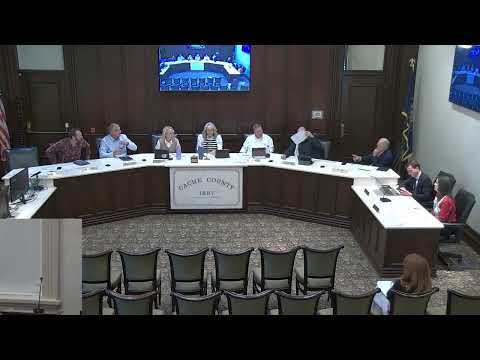
Logan Regional Hospital leaders told the Cache County Council on Thursday that the nonprofit hospital provided roughly $13,400,000 in charity care in 2024, substantially higher than the $2.1 million it would have paid in property taxes.
The presentation, delivered by Brandon McBride, hospital president, and Emilio Rodriguez, communications manager, outlined the hospital’s size and patient volumes and described how it treats financial assistance as distinct from bad debt.
Nut graf: The hospital said it must show that the community benefit it provides at least matches what the county would collect in property taxes. McBride told the council the $13.4 million is an adjusted figure (not gross charges) and excludes bad debt; the figure was reduced to reflect typical payer collections such as Medicaid and Medicare.
McBride said Logan Regional employs about 1,100 people, operates 146 licensed beds, delivered just under 2,000 babies in 2024, and recorded roughly 32,000 emergency-room visits. He described the hospital as a Level 3 trauma center with more than 400 physicians on its medical staff. He said the separate Logan Surgery Center performed about 2,500 additional surgeries not counted in the hospital totals.
McBride and Rodriguez detailed the hospital’s charity-care policy, saying financial assistance is available for individuals up to 300% of the federal poverty level and that the $13.4 million represents “pure charity care,” not bad debt. Rodriguez explained the adjustment method: because payers reimburse a fraction of gross charges (he said Medicaid typically pays roughly 20–30 cents on the dollar, Medicare about 40%, and private insurers between about 50–70 cents on the dollar), the hospital adjusts gross charity charges to reflect expected collections before reporting the charity-care total.
The pair also summarized the hospital’s three-year community health needs assessment, done in partnership with the Bear River Health Department. The 2023–25 priorities listed on the slide included improving mental well-being, chronic disease outcomes, social drivers of health and access to care. Rodriguez said the hospital recently completed a new assessment in April and that the Intermountain board is reviewing the 2025–27 priorities.
Council members asked for examples and clarification about the charity-care figure and payment adjustments; McBride described typical patient scenarios (emergency or elective care where the patient lacks means) and reiterated that the charity-care bucket excludes bad debt and is adjusted by likely payer collections. He also told the council that a large construction project on the hospital campus is nearing substantial completion and that the hospital plans to seek approval in the next one to two years for an expanded emergency department and laboratory.
The hospital offered to provide the council with a copy of the finalized community health needs assessment once Intermountain Health’s board approves it.
Ending: Hospital leaders left the council with contact information and said they would follow up with the county on the finalized community-health priorities and any future project approvals.