
Government shutdown could affect health coverage, national parks and rural Utah, panelists say
Get AI-powered insights, summaries, and transcripts
Subscribe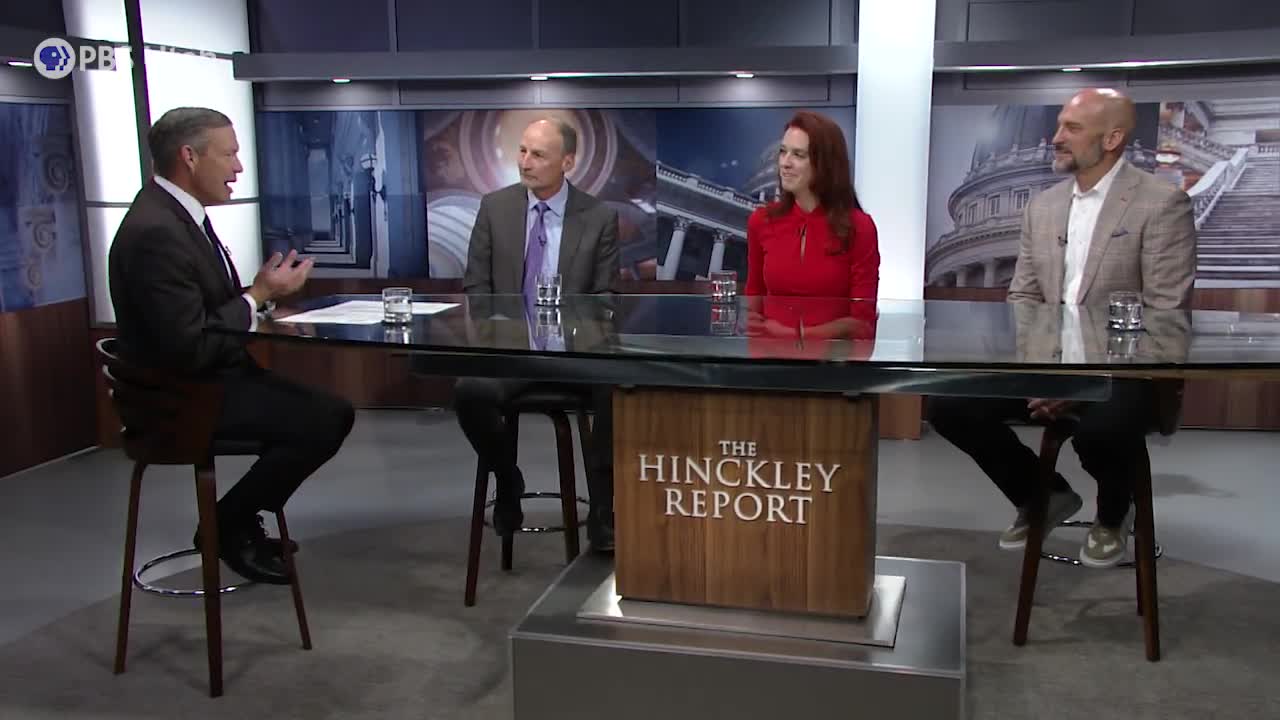
Summary
On the Hinckley Report, state and local panelists said a federal shutdown tied to budget fights over H.R. 1 risks furloughs, job eliminations and service interruptions that would hit Utah’s rural communities and hospitals; panelists also described past state efforts to keep national parks open during shutdowns.
SALT LAKE CITY — Panelists on the Hinckley Report warned that a U.S. federal government shutdown tied to a partisan budget fight could reduce health coverage, furlough or eliminate federal jobs and hurt Utah’s rural economies and national parks.
Representative Jennifer Dailey-Provost, a Democrat in the Utah House of Representatives, said a continuing-resolution fight over H.R. 1 risks stripping health coverage from thousands of people. “188,000 Utahns, by the way, stand to lose their coverage,” Representative Dailey-Provost said on the program.
The concern centers on a short-term continuing resolution Congress uses to keep spending at current levels while negotiations continue. Thomas Wright, a Utah business owner and panelist, described the current dispute as a partisan messaging fight and said some Democrats opposed a new continuing resolution to press demands tied to the larger bill in question. “This is the Schumer shutdown,” Wright said, using a phrase echoed by other panelists to describe the blame directed at Senate Democratic leadership.
Why it matters: Panelists said the most immediate local effects would be interruptions in health-care funding and tourism revenue. Dailey-Provost said the loss of coverage could force rural hospitals to close and increase uncompensated care costs that ripple across providers and communities. Wright and Dennis Romboy, editor and reporter for the Deseret News, added that federal workforce decisions during a shutdown could be more consequential than in past events because of guidance from the Office of Management and Budget that agencies look at potential reductions in force rather than only furloughs.
On federal-park impacts, the panel played and discussed a clip of U.S. Sen. John Curtis, R-Utah, who warned that closures can “crush” rural economies and urged caution about the political trade-offs of a shutdown. Panelists recalled that in prior shutdowns Utah state government stepped in to keep parks open: in 2013 the state paid more than $1 million to operate some parks, and in 2018 the state spent roughly $66,000 to maintain limited operations, panelists said.
Panelists also discussed the political mechanics driving the standoff. Dailey-Provost said the fight is a reaction to H.R. 1 and a broader effort by some lawmakers to reverse provisions of the Affordable Care Act that have increased access to insurance. Wright characterized the current tone as unusually partisan, with public-facing federal messaging blaming the other party and with the Trump administration, he said, signaling willingness to permanently eliminate some federal positions rather than furloughing them.
Dennis Romboy said the combination of partisan messaging and executive-branch discretion raises stakes for hundreds of thousands of families and federal employees. Romboy added that public polling shows divided opinion about fault for the shutdown and a substantial share of people who are unsure or disengaged from the dispute.
The panelists emphasized immediate local questions: whether the state will again fund limited national-park operations, how many Utahns would lose coverage if specific health subsidies are cut, and whether rural hospitals could survive a sustained loss of federal support. State action to keep parks open in prior shutdowns, the panel noted, was undertaken with an expectation of federal reimbursement that in some cases has not been fully repaid.
Panelists concluded by urging renewed focus on representative accountability and greater public engagement in the debates that lead to these funding standoffs.