Get Full Government Meeting Transcripts, Videos, & Alerts Forever!
Get email alerts on the Municipal Budget topic
No spam. Unsubscribe anytime.
Hoschton public hearing brings resident questions on 2026 budget, sewer expansion and master plan funding
Summary
Residents at Hoschton City’s public hearing asked detailed questions about proposed 2026 budget increases, limits on impact-fee spending for police operations, a planned $32 million wastewater expansion plus $10 million discharge relocation, and a council debate over moving master-plan funds to road repairs.
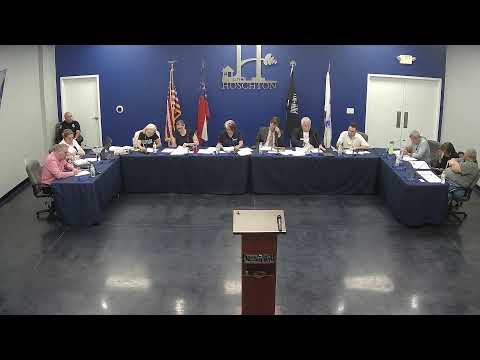
The Hoschton City Council opened a public hearing on the proposed 2026 budget, and residents used the forum to press staff and council for details about line items, capital projects and the timing of major sewer work.
Resident Edwin Acevedo asked for explanations of several budget lines, saying, “It looks like that the overall budget is about 10%,” and flagged a roughly 21% rise in park impact fees. He also questioned why planning-and-zoning regular employee lines were zeroed out and why the police impact-fee line appeared far smaller than projected department needs. “I had it under impact fees, but I thought it was a line under impact fees that’s targeted,” Acevedo said, and staff replied that impact fees “cannot be spent on regular m and o or salaries or anything,” only on capital infrastructure.
Why it matters: the exchange highlights limits on how the city can use impact fees — they may fund police facilities or equipment but not day-to-day operations — and points to gaps residents see between revenue lines and departmental asks.
Council member Scott (last name not specified) focused on long-term capital planning and the city’s debt position. He asked whether the budgeted “surplus” meant the city had about $16 million in capital funds or instead was budgeting a deficit. City staff said last year’s numbers reflected incomplete loan information at the time the budget was prepared; staff estimated the city’s cash position “in the high teens” million dollars but did not provide an exact figure.
A major capital item discussed was the wastewater treatment program. Staff confirmed the council has approved a $32 million wastewater treatment plant upgrade and a roughly $10 million discharge relocation — a combined total the comment period described as about $42 million. Council members and residents questioned timing and financing: staff said portions are being placed in loan accounts while options for loans versus cash are discussed. On schedule, staff and the project engineer indicated the first component (0.95 discharge upgrade) is expected to be complete by late 2026; the larger “2.0” upgrade currently targets completion by 2029–2030, with further increases (2.5 or 3.0) under study and contingent on Georgia EPD approvals and subsequent design and funding decisions.
The hearing also turned into a policy debate over a proposed city-funded master plan. One council member said the planning-and-zoning professional-fees line showed $60,000 budgeted and signaled an intent to move those funds to road repairs (White/New Street and other downtown work); she told the council she would “intend to make a motion” at the formal vote to transfer the money. Supporters of the master plan, including the mayor and other council members, argued the city needs a professional land planner to create a long-term vision, and noted that staff negotiated the planner’s initial quote downward. The mayor said she had negotiated the consultant’s price down from about $110,000; the final quote was provided to council the morning of the hearing.
Mulberry Park and grant risk also figured prominently. One speaker warned that delaying development of Mulberry Park could trigger impact-fee refunds to developers and risk losing a $500,000 grant; the speaker said the city already spent roughly $420,000 in impact fees to acquire five acres and had spent “about $100,000” on site plans and engineering, concluding a delay could put roughly $1.1 million at stake. Staff told the council the grant is site-specific and cannot be moved to a different parcel, but the city could decline the grant without automatic loss of funds tied to the site purchase; the legal and grant-management details will require follow-up.
What was decided: the hearing was for public comment and information gathering; no budget ordinance vote occurred at the hearing. Staff committed to follow up on specific line-item questions raised by residents and council members. The council opened then closed the hearing and moved on to the work session.
Ending note: the hearing left several items unresolved that will affect the council’s upcoming budget vote: exact cash-on-hand for capital projects, the city’s loan-versus-cash strategy for the wastewater program, and whether to shift planning funds to immediate road repairs.