Get Full Government Meeting Transcripts, Videos, & Alerts Forever!
Get email alerts on the Land Use Solar topic
No spam. Unsubscribe anytime.
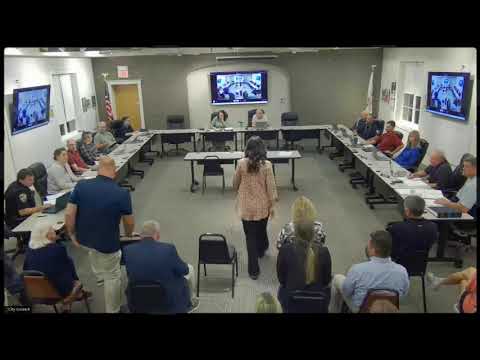
Council rezones Raymond Road parcel, approves conditional use for 12‑acre community solar array
Summary
After public testimony on drainage, fire response and property values, the Monticello City Council rezoned 1215 Raymond Road to industrial and granted a conditional use permit for a ground‑mounted solar array; developer says the project will offer community solar credits to residents.
The Monticello City Council voted to rezone a parcel at 1215 Raymond Road to industrial zoning and granted a conditional use permit allowing a ground‑mounted solar array after public hearings and a planning and zoning board recommendation.
The proposal, presented by developer Lindsay McIntyre of Sole Source Power and owner Suzanne Wells of R & S Unlimited, drew several hours of comment from nearby property owners, representatives of Mid Pyatt Fire Protection District, and council members who pressed the developer on stormwater, fire prevention, decommissioning, and property‑value concerns. The planning and zoning board recommended approval on a 5–1 vote; the council approved both the rezoning (Ordinance 20‑25‑65) and the conditional use permit (Resolution 20‑25‑66) at the meeting.
Developer Lindsay McIntyre described required federal and state reviews performed for the site, including an Army Corps nationwide permit for the access road and affirmative letters from the Illinois Department of Natural Resources and the Illinois Historic Preservation database indicating no record of threatened species or archaeological impacts. McIntyre said a glare study by a certified engineer showed no impact to nearby homes, that native pollinator seed mixes would be used and trimmed two to three times per year, and that the primary noise sources would be inverter pads emitting about 60 decibels at peak production — roughly the sound of a household air conditioner.
Mid Pyatt Fire Protection District representatives warned of increased risk if site vegetation were not managed and expressed concerns about emergency response workload; they told the council the district already handles many calls in the area. The developer said the company will provide on‑site training for local fire and EMS responders and that inverter pads can be de‑energized in an emergency. The developer also said a cash decommissioning bond, reviewed every five years per state law, would be required at permitting to guarantee removal of panels at end of life.
Several nearby residents and business owners raised concerns about topography, runoff and downstream flooding, removal of trees, potential agricultural land loss and whether the site was suitable for residential conversion in the future. Owner Suzanne Wells said the property was previously zoned industrial (dating in materials to 1986), is adjacent to other industrial uses and that the proposed solar use is “the least impactful you can use” compared with other industrial alternatives. Wells told the council the project includes a community solar option she expects will offer a roughly 10% electric bill credit to residents who opt in.
Council members clarified that approval of rezoning does not automatically approve final site design; the project will still be reviewed against the city’s stormwater, building, and site‑plan requirements, with staff to work with the developer’s engineers on drainage and road design. The planning and zoning board’s motion, related exhibits and the developer’s studies are part of the council packet.
Both the rezoning ordinance and the conditional use resolution passed by recorded council roll calls at the meeting. Staff said construction and permitting will require submission of final engineering, stormwater prevention plans and required bonds and permits before ground‑disturbing work begins.