Get Full Government Meeting Transcripts, Videos, & Alerts Forever!
Get email alerts on the Charter Review topic
No spam. Unsubscribe anytime.
Reading charter review commission holds informational session on Home Rule Charter
Summary
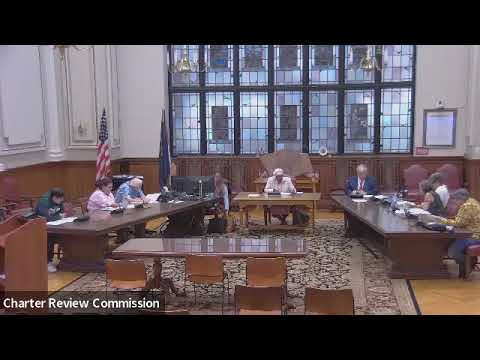
Pastor Evelyn Morrison, chair of the City of Reading Charter Review Commission, opened an informational session limited to reviewing the city's Home Rule Charter after attorney Ed Stott said the meeting had not been advertised as required by Pennsylvania's public meetings law.
Pastor Evelyn Morrison, chair of the City of Reading Charter Review Commission, opened an informational session to review the city’s Home Rule Charter and emphasized public participation in any future amendments.
Attorney Ed Stott, who led the review, told the commission the meeting had not been advertised as required by Pennsylvania’s public meetings law and that “we didn't get the meeting actually advertised tonight, which is a requirement of the public meetings law. However... we can do that as an informational session.” Because of the advertising lapse, the group limited discussion to the charter and agreed to take other business at a later meeting.
The commission heard a general overview of the charter’s history and structure. Stott said voters adopted Reading’s Home Rule Charter in the mid-1990s (effective Jan. 1, 1996) after a government study commission drafted it. He noted some provisions have been amended since enactment, including term limits added by referendum in 2020 that restrict the mayor, council president, council members and auditor to two consecutive four-year terms.
Stott summarized key provisions the commission discussed: council and executive structure, eligibility and residency rules, compensation and district funds, vacancy and forfeiture rules, ordinance procedures, and administrative offices.
- Council structure and eligibility: The charter creates a seven-member council (six district members plus a president elected at large). Council members and the council president must meet residency and voter qualification requirements before primary election filings, Stott said.
- Compensation and district funds: "Council members shall receive a nominal annual salary in amount of $5,000. The president of council shall receive $5,500," Stott read from the charter. He also explained there has been a separate district allocation that council members may use for community activities; commissioners referenced prior ordinances that made roughly $2,500 available per member for district work.
- Vacancy, forfeiture and removal: The charter requires forfeiture of office for certain defects (for example, moving out of the city or conviction of specified crimes) and provides a hearing process before forfeiture. When council vacancies occur, the remaining council members fill the seat by majority vote; if council fails to fill a vacancy within 30 days, the Berks County Court of Common Pleas may appoint a qualified resident on petition, Stott said.
- Powers, prohibitions and investigations: Council has broad legislative authority except where the charter assigns powers elsewhere. The charter contains prohibitions on holding compensated city employment while in office, dictating mayoral hiring decisions, and requires disclosure of financial interests in city contracts or land sales. Stott noted council may conduct investigations and audits under the charter.
- Ordinance procedures and mayoral veto: Stott explained that ordinances require a formal process: introduction, a 14-day "lay on the table" period to allow public input, and then adoption; ordinances generally take effect 30 days after adoption (not fewer than 10). He said emergency ordinances are permitted when delay would risk life or property, and that the mayor must sign ordinances within 10 days or return them with objections; council may override a veto with a five-member vote.
- Executive branch, mayor and managing director: The charter vests executive authority in the mayor and requires that the mayor present a budget and report annually on the city’s financial condition. The mayor appoints a managing director with council approval; if a managing director is not in place within the charter timeline, temporary appointment and fallback procedures apply. Stott read the managing director qualifications in the charter, which include graduate education in public administration or business or equivalent professional experience.
- Administrative offices: The charter requires council to appoint a city clerk within 30 days of taking office; the clerk keeps minutes and the official journal and serves at council’s pleasure for two-year terms. The 2020 charter amendments allow council to appoint its own solicitor so council can obtain independent legal advice when the city solicitor would be conflicted, Stott explained.
- Subpoena power: Stott read the provision allowing the mayor to issue subpoenas under the mayor’s official seal and to seek enforcement by the Court of Common Pleas if a recipient does not comply.
Commissioners and attendees asked clarifying questions about residency wording, the scope of prohibitions that could trigger forfeiture, how and when council may remove appointed officers, and how the charter’s "except as otherwise provided" clauses are interpreted by cross-referencing other sections.
The session was administrative and informational; there were no formal votes. Commissioners agreed on several next steps: Stott said he would handle meeting advertisements and ensure agendas are posted at least 24 hours in advance; the commission plans to include as an agenda item next week consideration of hiring a recording secretary; commissioners were asked to read the full charter and bring highlighted questions to the next meeting. Several attendees requested a re-scan and redistribution of the charter PDF because pages were missing in the version they received.
The commission scheduled a fuller, "robust" agenda for the next meeting to continue section-by-section review and to open formal public hearings at later sessions as the review process requires.