Get Full Government Meeting Transcripts, Videos, & Alerts Forever!
Get email alerts on the Public Health Kratom topic
No spam. Unsubscribe anytime.
Monticello council bans local sale of synthetic THC, kratom and novel psychoactive products
Summary
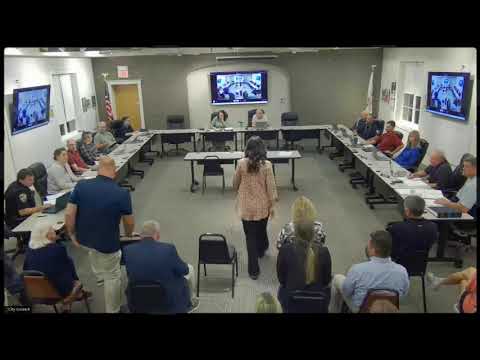
After hours of public comment from kratom consumers and advocates, the Monticello City Council approved Ordinance 20-25-67 to prohibit the sale of certain THC, kratom and synthetic psychoactive products inside city limits.
The Monticello City Council approved an ordinance banning the local sale of synthetic THC products, kratom and other novel psychoactive items after public safety and mental-health officials told the council the products were causing local harms and multiple residents urged strict controls rather than an outright ban.
Council members and speakers debated the public-health risks and consumer protections that motivated the measure. Police and mental‑health staff told the council the products being sold locally were synthesized substances tied to treatment cases; consumer advocates and several people with chronic pain urged the council to exempt natural kratom leaf and instead target concentrated, synthetic byproducts.
Rob, speaking for the city, framed the proposal as a response to local incidents: “These items are currently being sold in 2 gas stations/slash convenience stores in Monticello,” and said the items pose a “public health concern.” Several members of the public described long-term personal benefit from natural kratom leaf and recommended adoption of a Kratom Consumer Protection Act–style regulatory approach that would keep lab‑tested leaf products available while removing adulterated or synthetic products. Lisonbee Smith, director of government affairs for the Global Kratom Coalition, said federal agencies had distinguished natural leaf from concentrated synthetics and urged the council to “enact a prohibition against concentrated synthetic 7‑OH while simultaneously enacting common‑sense regulations such as an age requirement.”
Other speakers described clinical or lived experience with whole‑leaf kratom. Jennifer Gillis said she had used whole‑leaf kratom for six years after losing access to prescription pain medicines and credited it with restoring daily function. Dr. Heidi Sikora, a retired nurse practitioner, described clinical concerns but also urged the council to require testing, age limits and good manufacturing practices rather than a blanket prohibition on natural leaf.
Council discussion noted the legal and enforcement limits of a municipal ban, how the ordinance defines covered products, and that possession was not the subject of the measure; the ordinance prohibits local sale. Rob and other staff said enforcement would begin with notification to local retailers and a compliance period, with testing or evidence review if questions arose. The transcript records a roll‑call vote approving Ordinance 20‑25‑67; the motion passed, and the ordinance will prohibit retail sales of the listed products within Monticello city limits.
The council action does not criminalize possession, and several speakers noted residents can still obtain products from jurisdictions without such restrictions or via mail order. Officials said the city will coordinate with county mental‑health services and law enforcement on enforcement and outreach.
Council members and staff invited additional technical materials and offered to consult with public‑health experts about implementation and labeling requirements. Legal citations and federal actions cited during public comment — including the FDA’s July 29, 2025 coordinated federal action addressing concentrated 7‑OH products — will inform local interpretation and enforcement.
The ordinance’s local ban on sales takes effect according to the schedule in the adopted text; staff said they will provide retailers a compliance notice and an implementation timeline.