Get Full Government Meeting Transcripts, Videos, & Alerts Forever!
Get email alerts on the Food Access Nutrition Incentives topic
No spam. Unsubscribe anytime.
Farm Connect outlines SNAP and Double SNAP rules, says program reached 51 locations and $330,000 redeemed statewide
Summary
Farm Connect Montana explained SNAP, Double SNAP and token rules for vendors at the Missoula Valley Winter Market vendor meeting, including statewide redemption figures, eligible items, matching caps and guidance on accepting tokens from other markets.
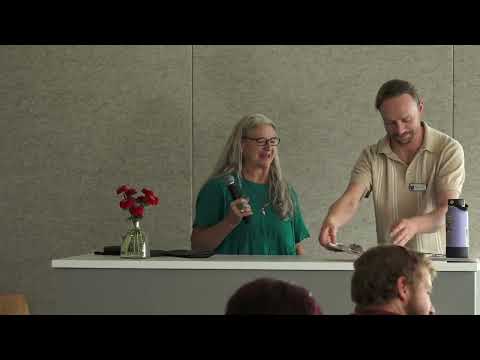
At the Missoula Valley Winter Market annual vendor meeting in Missoula, Farm Connect Montana staff explained how SNAP and the Double SNAP nutrition-incentive program work at markets and urged vendors to display required signage and follow token rules.
The explanation matters because token handling affects what vendors may sell and how low-income customers can pay. Ian Finch, food access program director at Farm Connect Montana, told vendors that “across the state of Montana, we had 51 locations offering double snap dollars this year and collectively redeemed 330,000 in double snap, which is a lot.”
Finch said SNAP (Supplemental Nutrition Assistance Program) benefits are loaded on an EBT card called the Montana Access Card. At markets, customers swipe the card at the market information booth and receive blue SNAP tokens that may be used for most grocery-style items but not for hot prepared foods. Double SNAP is a separate nutrition-incentive program that provides green tokens usable only for fruits and vegetables, herbs, mushrooms, plants that produce edible food and, newly this year, dried beans, peas and lentils.
Finch explained that Double SNAP matches purchases dollar-for-dollar up to different caps at different markets — examples cited were $10, $20 or $30 depending on the market’s arrangement with funders — and that the program’s funding is a mix of federal and local sources. He said the program’s growth this year was supported by that mix of partners.
Vendors received practical rules: tokens cannot be exchanged for cash. Finch clarified that markets may carry $1 SNAP or Double SNAP token denominations to provide token-based change, but “no cash change.” Vendors are asked to post the SNAP/Double SNAP posters at their booths so customers know which tokens are accepted.
Farm Connect and market volunteers also addressed tokens brought from other markets. Finch said vendors should not turn customers away: “please don't turn them away,” but vendors should inform customers that tokens are intended to be redeemed at the market where they originated and that tokens across the state are labeled with their originating market.
Pam Walzer, a long-term vendor and board member who helps steward incentive programs at the market, described the prescription produce program run through Saint Pat's/Providence. She corrected an initial figure and said clients receive $20 a week to spend on fruits and vegetables, which can be redeemed at vendor booths in the same way as Double SNAP tokens.
For more information, Finch directed vendors to the Double Dollars Montana website and invited questions after the meeting.
Ending: Vendors were asked to display the required SNAP/Double SNAP posters and to contact Farm Connect or the market information booth with questions about token handling or program details.