Get Full Government Meeting Transcripts, Videos, & Alerts Forever!
Get email alerts on the Conservation Dam Authority topic
No spam. Unsubscribe anytime.
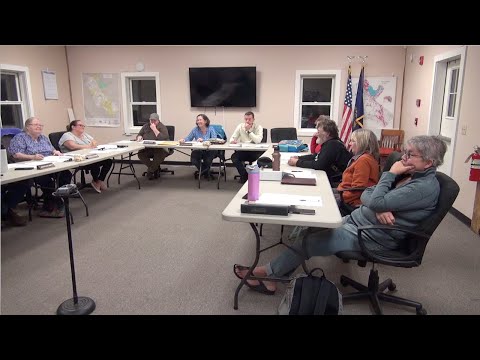
Conservation commission outlines funding limits; Select Board flags rising dam authority costs
Summary
Ossipee conservation members described restricted trust accounts used for maintenance and land purchases (including an Eisner fund and a fish-hatchery account of about $60,000); the Select Board was briefed on rising dam authority expenses and a supplemental bill affecting local assessments.
Members of the Ossipee Conservation Commission told the Select Board they rely on several restricted funds for maintenance and land purchases, and that some funds—such as an "Eisner" trust—may be used only to buy land, not to pay for trails or maintenance.
"We have money to, you know, to do maintenance or to do trails or to hire companies to come in or, and none of that money can be used for that. The money can only be used it's not for beautification. It's not for anything. It's only to purchase conservation land period," a conservation member said regarding the Eisner fund and similar trusts. The commission reported a separate long-standing account, originating from proceeds tied to a former fish hatchery, holds roughly $58,000–$60,000 and currently pays for small maintenance projects, landscape fabric and mulch, and reimbursement to volunteers who buy materials. "We just take the money out for the materials," the commission member said.
Board members raised the policy trade-offs between conservation holdings and the town tax base. A member of the public asked how much conservation land the town owns; Select Board members and commissioners said there is no single fixed limit on municipal conservation holdings, that some donations include restrictions preventing sale, and that municipal policy or a town vote would be required to change how certain receipts (for example, current-use penalties) are allocated.
Separately, town staff told the Select Board that costs from the regional dam authority have "gone through the roof," and that the authority recently sent a supplemental bill. The dam authority's operating model was described as one in which routine operations were expected to be split among three towns historically, but one neighboring town did not join, leaving Ossipee and Freedom carrying the share. Board members said they are seeking more detail on why the authority's costs rose and why towns remain financially responsible for a state water body.
The Select Board took conservation and dam funding items under advisement and reminded departments they may return with revised budget requests or more documentation before final appropriations.