
Parents urge board for data and public input on proposed grade‑level reconfiguration
Get AI-powered insights, summaries, and transcripts
Subscribe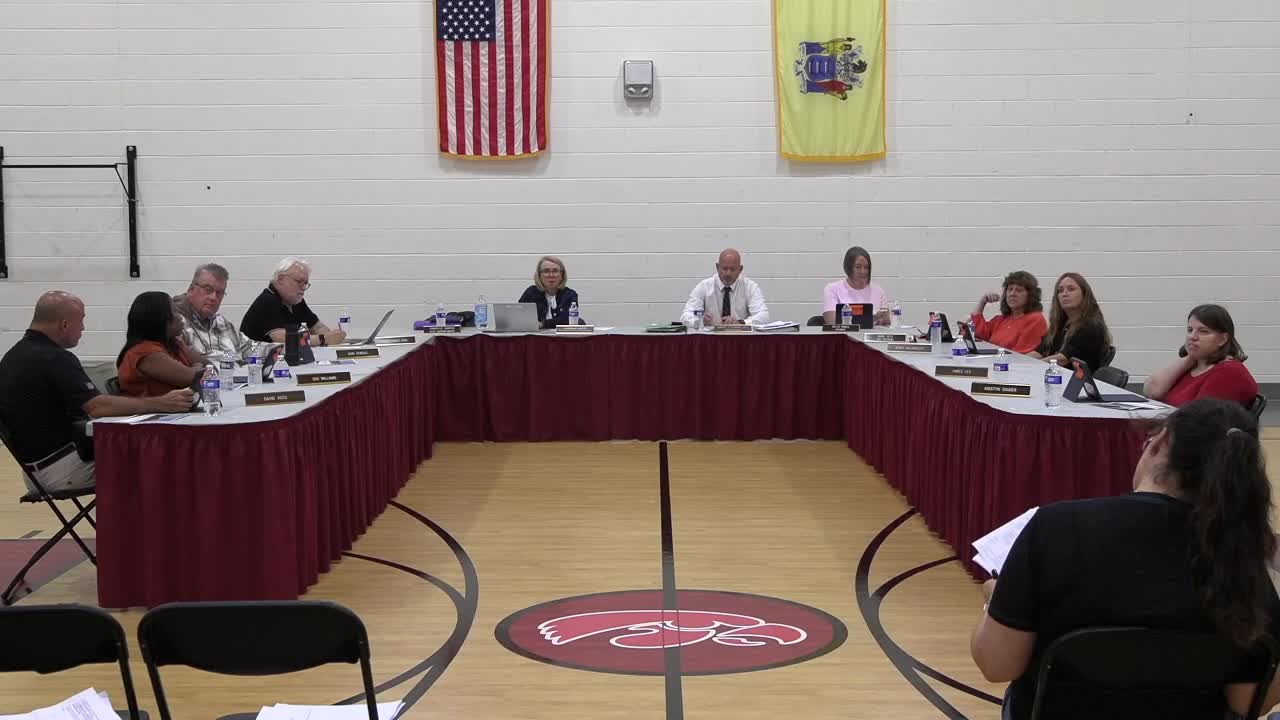
Summary
Parents at a Haddon Township School District meeting pressed the board for updated data and broader community engagement after district staff raised grade‑configuration options; staff said reconfiguration is being examined as a contingency against future budget stress and recommended exploring an early childhood center.
Parents and district staff debated a possible grade‑level reconfiguration for Haddon Township School District, with parents saying the board has not provided updated data and staff saying the exercise is a contingency planning step.
“I live on New Jersey Ave. I'm a parent of 3 children in the district. I'm speaking tonight because like many in the community, I was involved in a conversation about grade level reconfiguration 5 years ago,” said Resident (parent/resident) during public comment. “We were told again that this shift would improve efficiency and educational quality, but no updated data has been shared to support that.”
The resident told the board the same idea had been discussed five years earlier and was rejected by the community at that time. The commenter asked whether the district plans to close a school or reduce teacher positions to realize savings, saying such moves would increase class sizes and burden families with longer, less walkable commutes.
District staff responded that the reconfiguration exercise is being considered largely as a contingency if the district faces another budget crisis. District staff (District staff) said, “There's a few reasons then. Number 1, at the time, there was actually no assurances that we were going to receive the tax lien set with a that just recently came through to begin discussing potential reconfigurations if we face another budget crisis. The only real scenario for cost savings would be closing the school. Okay? And that's not good educationally.”
Staff also said the board and community should consider other longer‑term structural options, including an early childhood center that could house pre‑K and K‑1 programs. “My recommendation that at some point in the future, this board of education and this community should look towards to consider looking towards implementing early childhood center,” the staff member said.
Parents and speakers raised several concrete operational concerns. One parent said their child’s elementary classroom had 27 students this year; staff gave class‑size figures for some grades as “24, 23, 22” and noted that kindergarten enrollment projections differed from assignments—staff said about 35 kindergarten students were expected for one school but only 24 were assigned in their planning model. Traffic and congestion impacts from students being driven to multiple schools were also cited by a speaker as a neighborhood concern.
The district also discussed non‑reconfiguration items tied into planning: adjustments to after‑school childcare scheduling with a plan to offer three options, including a five‑day Monday–Friday option; a planned hire of a full‑time business‑office staff member starting in September; and rollout of new childcare scheduling software. One district speaker praised the student assignment methodology, saying, “The methodology is working. I'm pleased with it. And we're excited to start another year.”
No formal motion or vote on grade‑level reconfiguration was recorded in the portions of the meeting provided. The discussion combined public comment and staff remarks; parents requested updated data, research, and a formal community engagement process before the board pursues changes that could affect class size, staffing, school closings or family transportation burdens.
Meeting remarks referenced a similar community conversation five years earlier when reconfiguration was considered and not advanced; residents repeatedly asked that any renewed proposal come with clear, updated cost and educational impact data and opportunities for public input.
The board did not announce a decision at the time of the discussion. Staff described the current status as exploratory and tied to financial contingency planning rather than an immediate proposed closure or staffing reduction.