Get Full Government Meeting Transcripts, Videos, & Alerts Forever!
Get email alerts on the Homelessness Services topic
No spam. Unsubscribe anytime.
Council backs $4 million forgivable loan to New Day Intake Center for low-barrier shelter; city budgeting $500,000 for operations in 2026
Summary
The Common Council gave a favorable recommendation to a forgivable loan and related approvals to support a low-barrier intake shelter at 4022 Old Cleveland Road. Project includes at least 110 shelter beds, a minimum $10 million developer investment and post-completion reporting requirements.
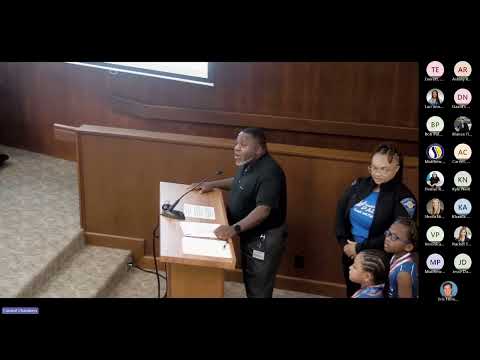
The South Bend Common Council advanced a proposal on Sept. 22 to authorize a $4 million forgivable loan from tax-increment revenues to New Day Intake Center Incorporated for a low-barrier intake shelter at 4022 Old Cleveland Road, with the redevelopment commission and economic development commission already having approved the project.
City staff said the development agreement requires New Day to construct a minimum 110-bed emergency shelter (current designs show 120 beds) and to make at least a $10 million minimum capital investment. The developer must complete construction and open to receive guests within 36 months of breaking ground. The organization will sign a separate five-year operating agreement with the city; the 2026 budget presented by the mayor includes $500,000 toward operating costs for the shelter.
Caleb Bauer, executive director of Community Investment, said the forgivable-loan format is allowed under the economic development statute and will be funded from three tax-increment finance (TIF) districts — River West, River East and South Side — in proportions tied to each district’s revenues. "This agreement ... utilizes tax increment financing revenues controlled by the redevelopment commission," Bauer said during the committee presentation.
New Day representatives described programmatic commitments and reporting requirements that will survive project completion. Exhibit E of the development agreement lists 16 post-completion reporting items, including measurable outcomes: the number of people moved into permanent housing by housing type, length of stay at the shelter, the percentage of clients exiting to permanent housing within 90 days, meals provided, partnerships with service providers and measures of diversion and coordinated-entry placements. The agreement also requires 100% guest access to basic services (meals, showers, laundry) and case-manager contact within 48 hours of entry.
Project proponents told the council they are close to completing capital fundraising; New Day officials said roughly $730,000 in capital remained to be raised for Phase 1 and that a grant application was pending. Board and fundraising leaders also described a strategy of foundation, university and private support to sustain operations. The redevelopment commission holds the larger parcel; the agreement includes an option for the commission to purchase the existing "Nights Inn" facility for $1 six months after the new intake center opens, with a five-year window to exercise that right.
Council members asked about local-hire and contracting plans; New Day and partners said federal Home-ARP grant rules apply (Davis-Bacon prevailing-wage requirements) and that they are prioritizing local contractors. The council voted to send the measure to full council with a favorable recommendation and later adopted the ordinance on third reading by a recorded 9–0 vote.