Get Full Government Meeting Transcripts, Videos, & Alerts Forever!
Get email alerts on the City Budget topic
No spam. Unsubscribe anytime.
Mayor outlines 2026 budget and warns of revenue uncertainty from Senate Enrolled Act 1
Summary
Mayor James Mueller presented the proposed 2026 budget and warned that changes from Senate Enrolled Act 1 could significantly reduce property- and income-tax revenues; the council held a public hearing and will take action at a future meeting.
Mayor James Mueller presented the city of South Bend’s proposed 2026 budget during a public hearing Sept. 22, telling the Common Council that state-level tax law changes under Senate Enrolled Act 1 create substantial uncertainty for property- and local income-tax revenues and will require continued fiscal adjustments.
The mayor said the proposal preserves priorities including public safety, street repair and youth and workforce development while noting the city faces a projected $18.6 million combined deficit across all funds under current assumptions. "Most of the funding sources that the city relies upon are having significant changes," Mueller said, describing the combined impacts on property-tax growth and local income tax distribution.
Mueller and outside financial advisers presented modeling showing a range of outcomes. The legislative-services estimate projects property-tax receipts flattening through 2028; a Baker Tilly analysis showed larger potential losses depending on how counties and cities use the new local-income-tax options. The mayor said a key variable will be whether county levies include a fire-protection (EMS) component that effectively shifts revenue to countywide taxation.
City Controller Kyle Willis reviewed midyear and department-level changes included in the proposed budget and in the quarterly appropriations and transfers before the council. Willis described appropriations for the fire department (including $850,000 from fund 101 for equipment, building repairs and increased EMS drug costs), $478,000 for parking-garage maintenance, and transfers to cover professional services and human-rights office rent among other line items.
Council members asked when the administration would make deeper cuts if required; Mueller said the administration had proposed what it considered lower-impact reductions already and that further reductions would be more painful. "We have to make the best decisions we can with the information we have," he said, urging more data points over the coming months — notably year-end cash balances and next summer’s distribution data that will show initial revenue impacts.
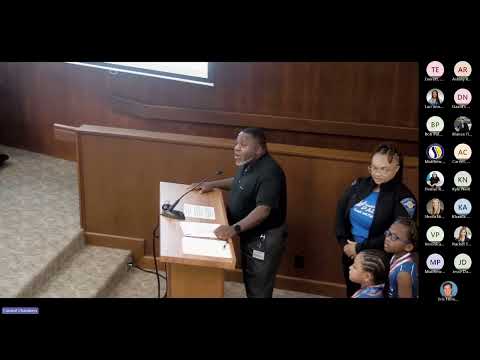
During the public hearing, residents raised concerns about transparency, debt service and tax abatements. Resident Sue Chisholm criticized the availability of budget documents and said the public drive did not include promised forms before the hearing; Jesse Davis urged the council to reconsider tax-abatement policy. The council clerk confirmed the public hearing closed and the council will take up the budget for possible action at the Oct. 13 meeting as required by state law.
No ordinance vote was taken on Sept. 22; the presentation and discussion were part of the required initial hearing. The administration and council members said they will continue department-level hearings and expect more public and written questions prior to the council’s final vote in October.