Get Full Government Meeting Transcripts, Videos, & Alerts Forever!
Get email alerts on the Police Abolition topic
No spam. Unsubscribe anytime.
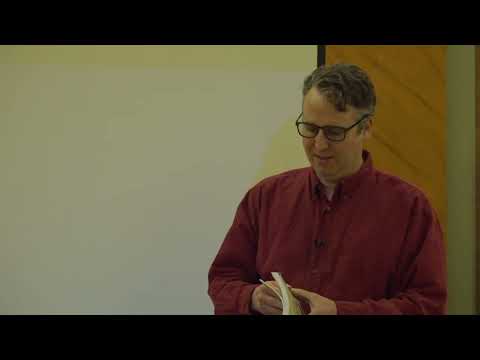
Anarchist author argues police are institutionally racist and urges abolition at Missoula DSA talk
Summary
Christian Williams told a Missoula DSA audience that policing in the U.S. is rooted in slave patrols, that reform has strengthened rather than corrected police power, and that abolition should guide strategy and experiments in community safety.
Christian Williams, an anarchist author and journalist, told a Missoula audience on Oct. 1 that U.S. policing is an institution rooted in slave patrols and that "the racism and violence of the police are not incidental, but are inherent features of the institution." The presentation framed abolition as both a moral imperative and a long-term political project rather than an immediate operational plan.
Williams said the modern police evolved from slave patrols tasked with enforcing slavery and later controlling free Black people and poor whites. "The police developed to control poor people and people of color, and they are still on that job today," he said, arguing that twentieth-century reforms — from professionalization to community policing — have left police "better paid, better trained, better organized, better armed" while preserving the institution's core functions.
The author said abolitionists must balance principled commitment to eliminating policing with practical organizing. "If abolition is our goal and not merely a moral precept...that leaves us with the hard work of building an oppositional political movement that is capable of eliminating the existing criminal legal system," Williams said. He urged tactics that "discredit the police in public view," reduce police resources, "undercut this cop's sense of impunity," and expand community capacity for safety and dispute resolution.
Williams reviewed historical experiments in community safety, including labor-era mutual aid in the Seattle General Strike, armed self-defense groups during the civil-rights era such as the Deacons for Defense and the Black Panther Party for Self Defense, and later community-based programs aimed at addressing gang violence and gendered violence without primary reliance on criminal courts. He described both successes and limits: for example, some community defense efforts lowered violence but later faced state repression or co-optation.
On accountability within community defense organizations, Williams cautioned that groups that adopt coercive or armed capacities risk internal militarization and authoritarianism if they lack democratic controls. "They did not do a very good job of...establishing community control of the Black Panther Party," he said, noting internal tensions and political limits that followed when groups took on policing roles.
Williams concluded that experiments should be understood as partial, imperfect attempts to shift safety responsibilities away from the state toward community structures. He said history offers lessons but no turnkey replacement for policing, and that abolitionist strategy should combine immediate accountability organizing with longer-term institution-building.
The presentation was part of the Western Montana DSA’s Socialist Speaker Series and was followed by audience questions about tactics such as filming police encounters and models for community accountability. Williams encouraged lawful, context-sensitive tactics and said documenting police can be legally protected and politically effective, while noting limits and risks.